
PENGUIN CHICKENS OUT, AGAIN!
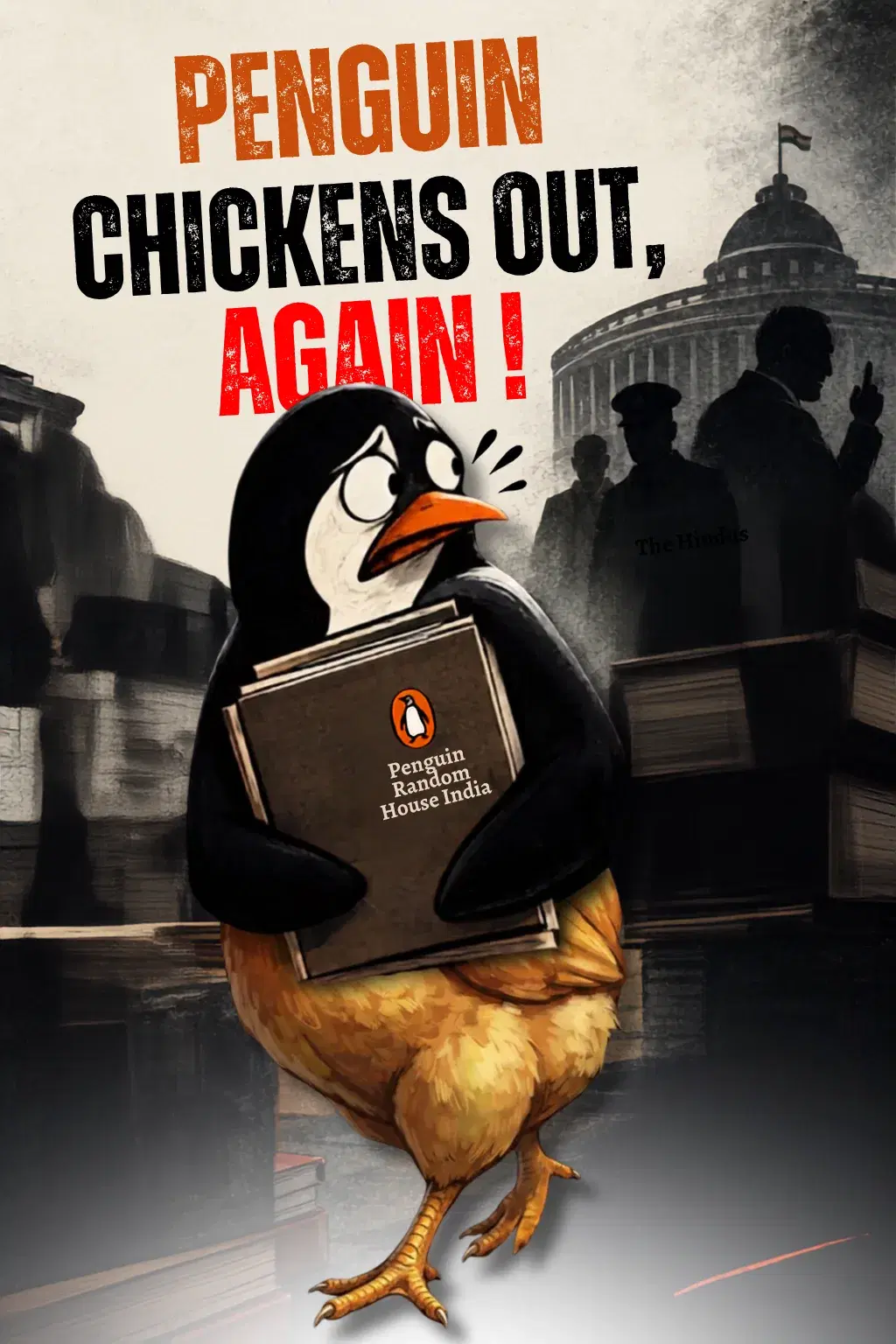
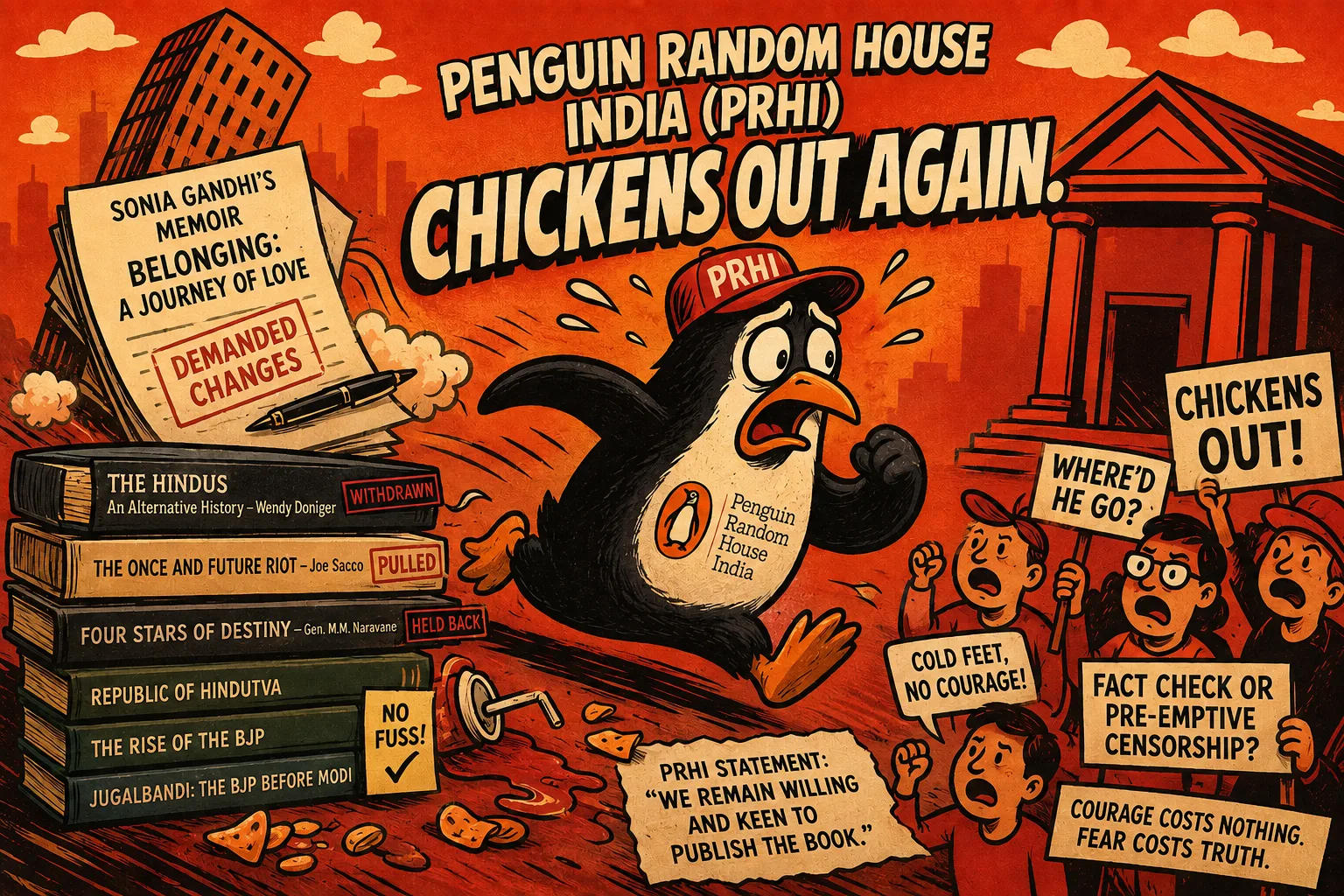
Penguin Random House India (PRHI) chickens out again. And
I'm not just talking about the collapsed deal for Congress leader Sonia
Gandhi's highly anticipated memoir, Belonging: A Journey of Love, but
the trend behind it. Big publishers carry bigger responsibility, but it turns
out PRHI develops cold feet — it lacks the courage of its convictions.
In the case of Sonia's memoir, PRHI's legal and editorial
teams demanded changes or deletions to certain sensitive passages, which Sonia,
quite understandably, firmly and plainly refused. PRHI insisted a "fact
check" was required on passages detailing her personal impressions from
official meetings with Prime Minister Narendra Modi, his leadership style, and
the policies of the central government — as well as on her account of Chinese
incursions along India's borders, and her comments on the role of the Rashtriya
Swayamsevak Sangh (RSS) in India's social history, which weren’t flattering.
PRHI denied any political pressure but offered no explanation for why these
fact checks were required only for the Indian edition.
This is not an isolated incident but part of a
well-established pattern. PRHI seemed more than willing to withdraw and pulp
all remaining copies of American Indologist Wendy Doniger's The Hindus: An
Alternative History. Nor should we forget that a book by arguably the
world's greatest living graphic novelist, Joe Sacco — The Once and Future
Riot, based on the 2013 Muzaffarnagar riots — was also pulled by PRHI,
allegedly over the use of an "inaccurate" map of India. Sacco has
said on record that the publisher was looking for "excuses" to pull
out of the project. "It's embarrassing that the Indian publisher does not
want to distribute a book like this because of the current political climate in
India," he reportedly said.
More recently, PRHI was entangled in a national-security
dispute over former Indian Army Chief General M.M. Naravane's memoir, Four
Stars of Destiny, after Leader of the Opposition Rahul Gandhi quoted leaked
passages on sensitive India-China border tensions on the floor of the Lok
Sabha, ahead of the book's official release. Delhi Police's Special Cell
registered an FIR, and PRHI, predictably, swung into action at once — halting
the rollout and pugnaciously clarifying that it had not published or distributed
any digital or physical copies, perhaps to save its own neck. The neck stayed
safe; the grit was the casualty.
On the other hand, when PRHI published books exploring
the ideological and electoral rise of the RSS and the BJP — academic,
analytical works like Republic of Hindutva, The Rise of the BJP,
and Vinay Sitapati's Jugalbandi: The BJP Before Modi — without much
fuss.
Which makes PRHI's risk-aversion look less like caution
and more like something closer to subservience. And why blame the government
for it? There are dozens of smaller publishers, run on a shoestring, would
happily take on any of the books PRHI seems too scared to touch.
Sonia's memoir will find plenty of takers too. Standard
fact-checking and editorial review, it seems, have become a convenient pretext
for pre-emptive censorship — a way to dodge costly court battles or avoid
government ire. Dispensing with moral courage, after all, costs nothing.
Despite everything, PRHI still maintains: "We remain willing and keen to
publish the book."