

Deaf Gain
People who are born deaf are not mute. Most can vocalize, but without hearing their own voices or the voices around them, spoken language does not come naturally. They have a language of their own: sign language, a fully developed visual language with its own grammar and syntax.
The brain adapts, too. Through neuroplasticity, specifically
cross-modal plasticity, regions that would ordinarily process sound are put to
work on the other senses. Research points to strengths in visual processing: a
wider field of peripheral vision, keen tracking of moving objects, and an eye
for subtle changes in the environment, the result of finely trained visual
attention. Some studies also suggest heightened sensitivity to touch and
vibration, as the auditory cortex takes on tactile information.
This is what scholars call "Deaf gain," a term coined by
H-Dirksen Bauman and Joseph Murray. It reframes deafness not as a medical
problem to be fixed but as a form of cognitive, cultural, and human diversity
that offers strengths to individuals and to society. Spending time with the
people who live this, and documenting their resolve, taught me a great deal.
I visited the Noida Deaf Society (NDS), a not-for-profit founded by
Ruma Roka that works for the empowerment and inclusion of deaf children and
youth. Its aim is self-reliance: quality education, job-aligned vocational
training, and sustainable employment, so that deaf gain can also be a
livelihood. It
was a great gain to be with them and learn from them while documenting their indomitable
spirit.
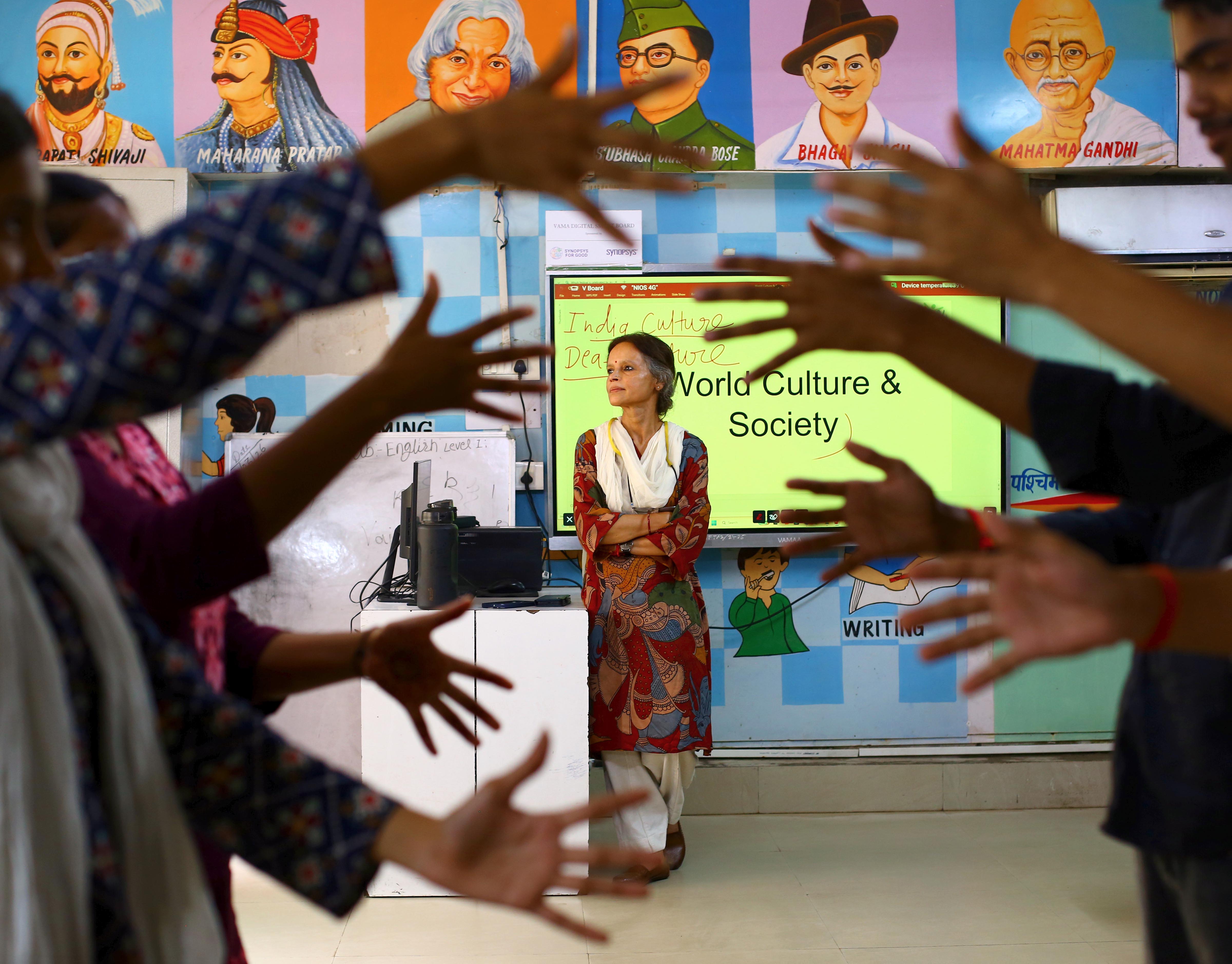
In these classrooms, the question is not whether these young people can
make themselves heard. It is whether the rest of us will learn their language.
In this space, with children and their teachers, the Symphony No. 9 in D minor, Op. 125 finished in 1824 by Ludwig van Beethoven, one of the greatest composer, conductor, and pianist to have ever lived, was playing in my head. Though not deaf by birth, he created this symphony entirely in his head without him being able to hear the orchestra or choir as he was completely deaf. These children promise to lead profound lives of great achievements, and do well for themselves and society in a silent way that will be heard loudly by ordinary people like us.