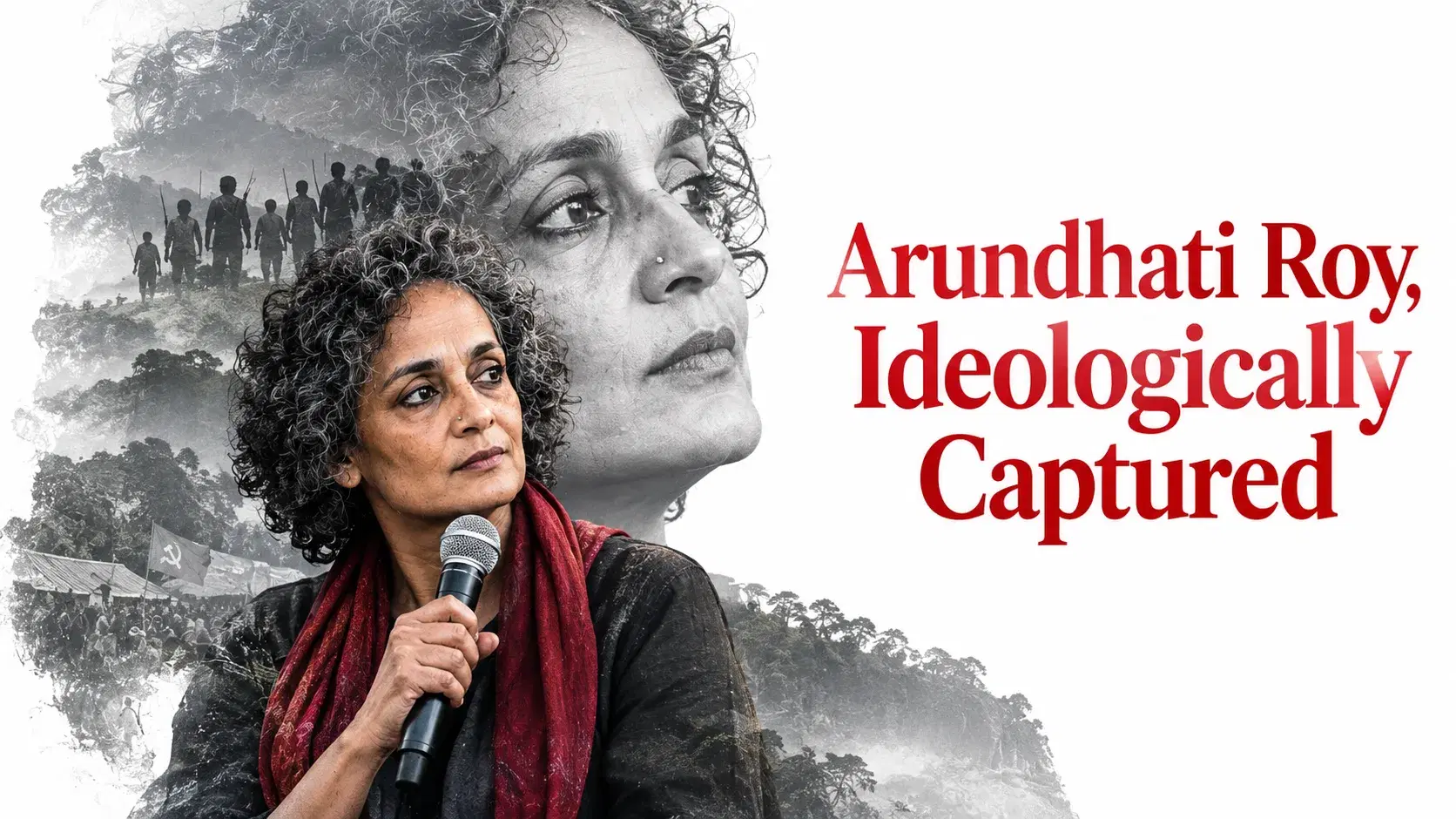
Arundhati Roy, Ideologically Captured
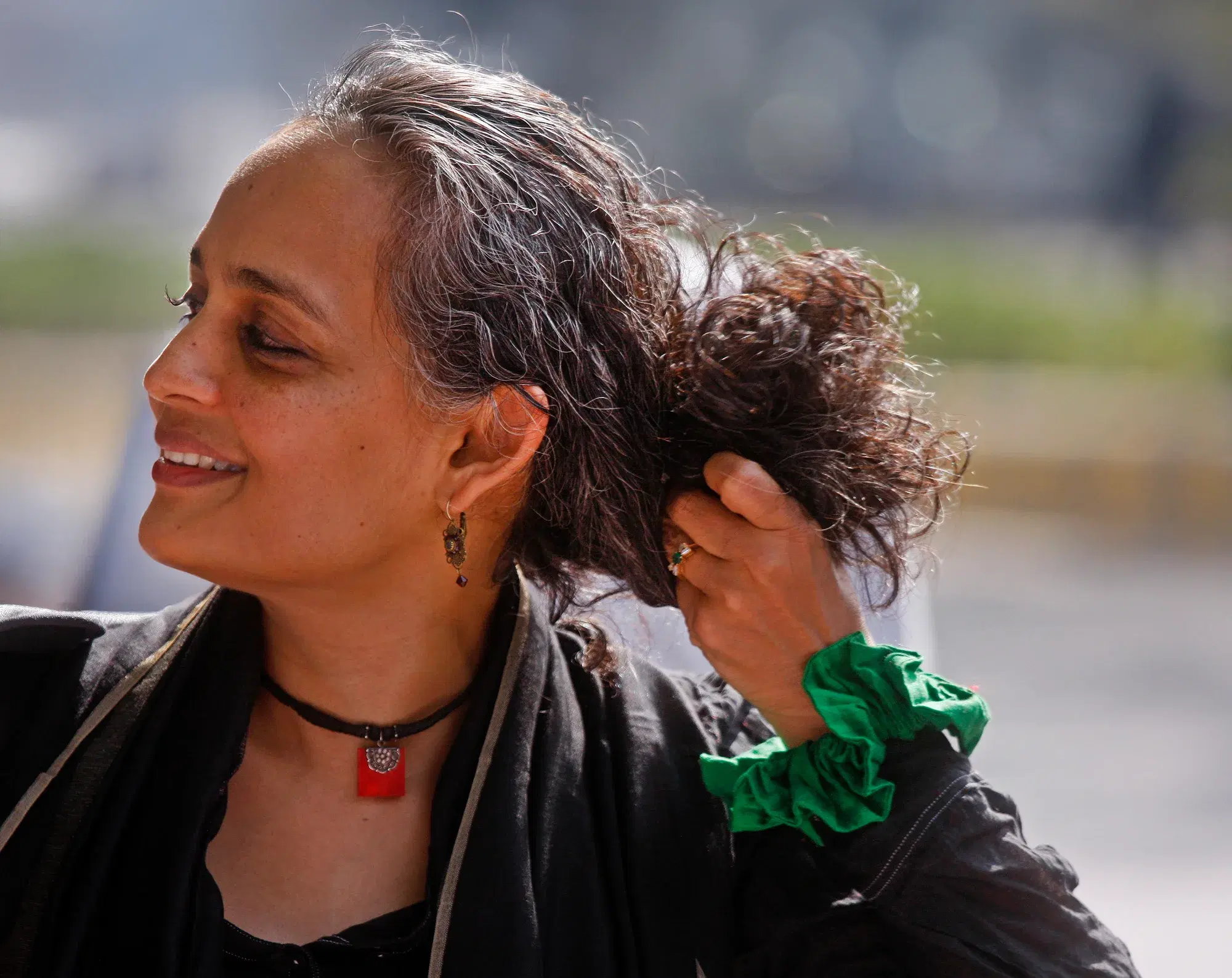
Arundhati Roy's Blind Spot: A Thief Sees Thieves Everywhere. Compromised writers write their most convincing copy when they're describing someone else's compromises. They'd say this applies to me too, since I'm critical of Arundhati. Okay!
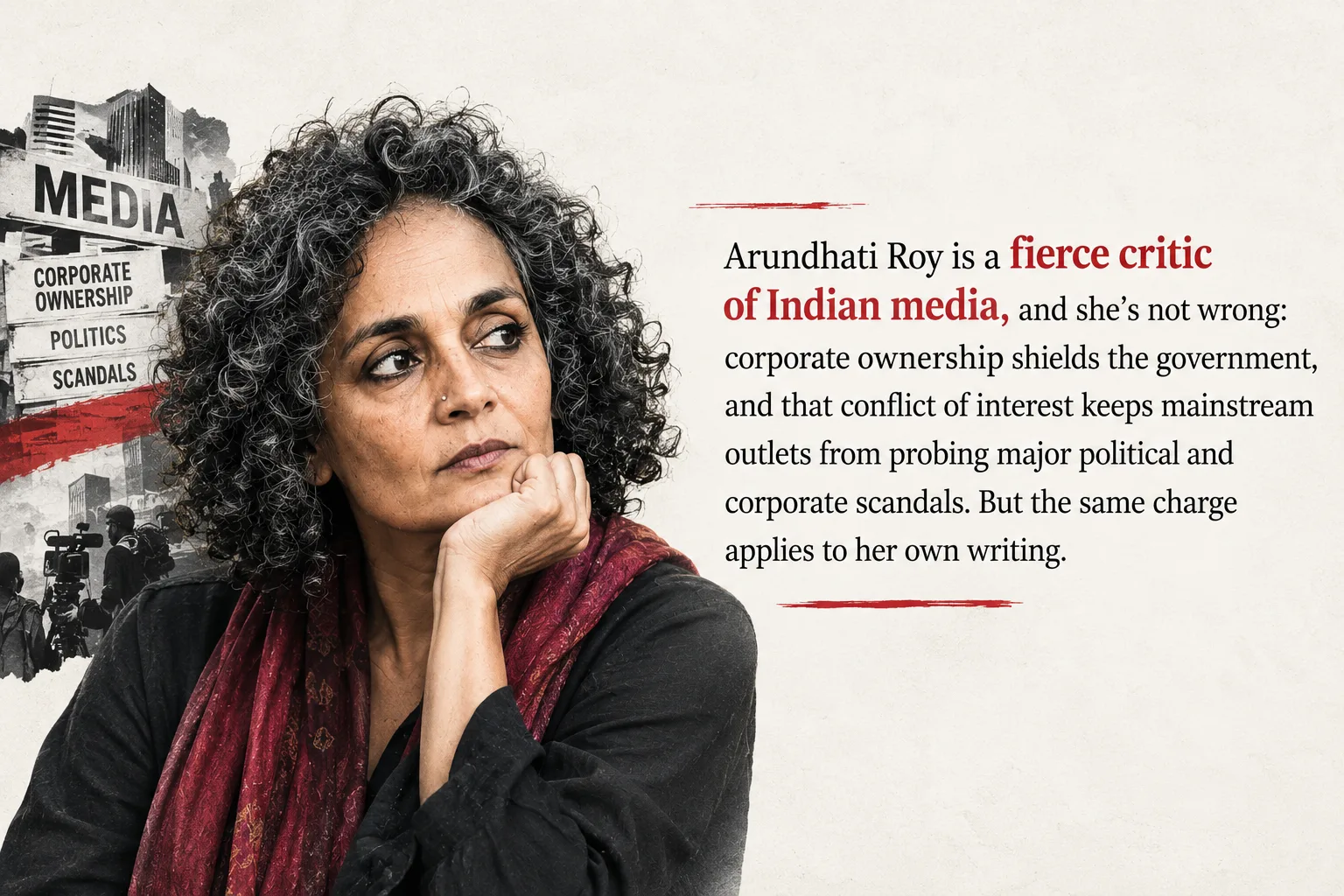
Arundhati Roy is a critic
of Indian media, and to a great extent I agree: corporate-controlled Indian
media shields the government, and this conflict of interest prevents the
mainstream press from investigating major corporate and political scandals. Outlets
often frame independent foreign reports or critical investigations as attacks
on national sovereignty. This forecloses real debate.
But this isn't true of
Indian media alone — it's true of her own writing as well. She has a clear
political point of view, and she selectively gathers facts to advance it, much
like the reportage she criticizes. As a result, her work carries little more credibility
than the media she takes such pleasure in condemning.
A good example is her
field report Walking with the Comrades (2011), an eyewitness account of
the Naxalite/Maoist insurgency. In 2010, she spent time in the dense forests of
Chhattisgarh with Naxalite guerrillas. Given access to their point of view, she
blamed the Indian government with great eloquence. She argued that India's
counter-insurgency campaign, Operation Green Hunt, was really a front for
mining corporations to clear tribal land and exploit India's natural resources
for profit. She laid the blame squarely on the government — it seems, in order
to justify the guerrillas' own violence — citing the theft of tribal land,
human rights, Israeli support for Operation Green Hunt, Hindu missionary
activity, the caste system, women's rights, and the treatment of cows. Roy's
personal impressions of what she witnessed make the account vivid and
compelling.
During her time with the
Naxalites, she met soldiers of the People's Liberation Guerrilla Army (PLGA),
whom she described as heavy hitters carrying serious rifles. She noted, with
evident surprise and approval, that 45 percent of the PLGA's fighters were
women — many of whom, she wrote, had joined the communists after witnessing
attacks on their villages by the Indian government and vigilante groups. Even
so, she described the Maoist organization as still deeply patriarchal.
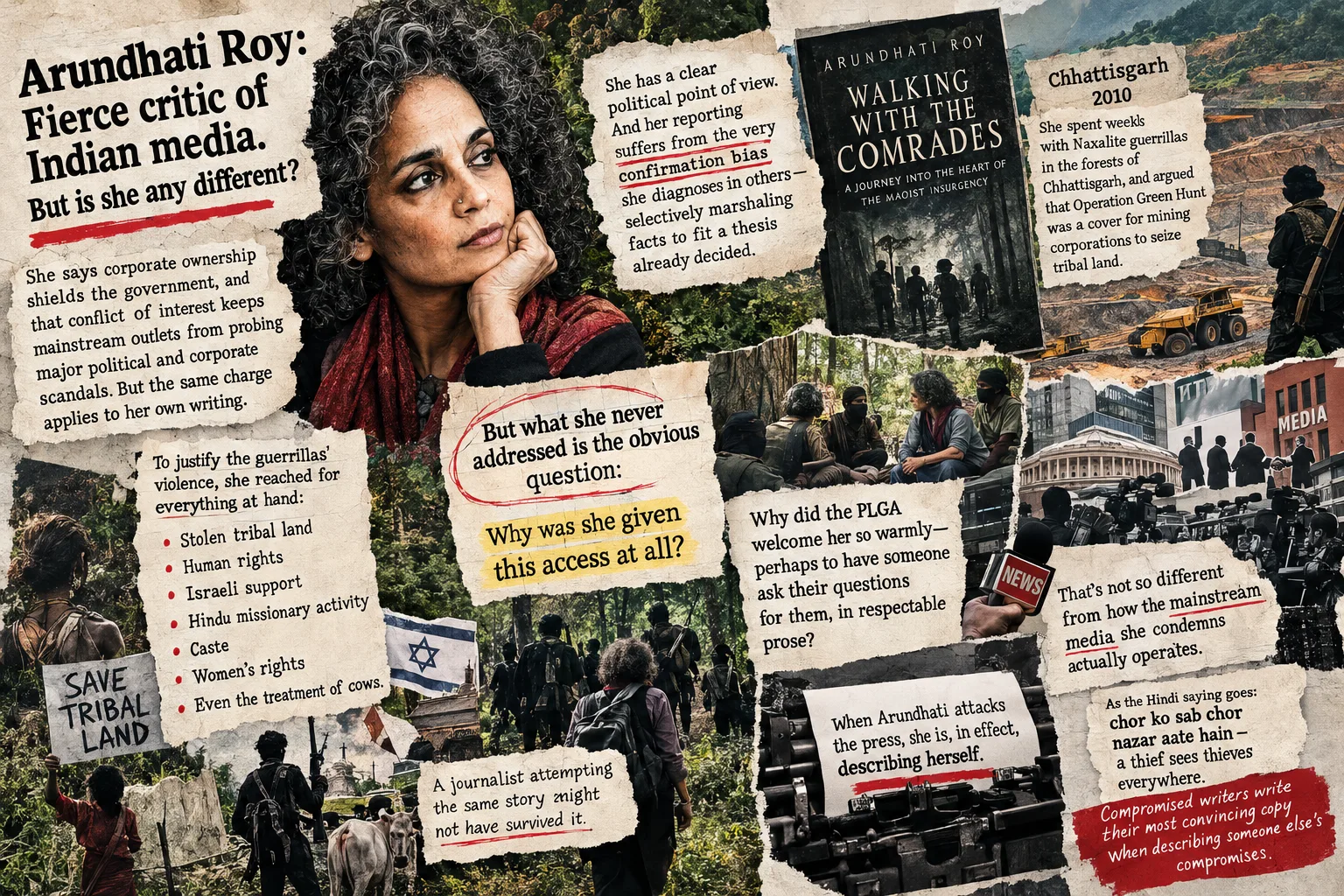
The question she never
answers is why she was granted this access — if I had tried to report the same
story at the time, I'd likely have been blown to pieces — why the PLGA gave her
a comfortable stay so she could go on to ask uncomfortable questions. Because,
much like the corporate mainstream outlets she says are sympathetic to the Modi
government, a reporter dependent on her hosts' goodwill will never give a true
picture. The same applies to her own report. She was given access by the PLGA,
articulated their point of view, and blamed the government for their violence —
even though it was the PLGA doing the killing, of ordinary people and security
personnel alike. She suffers from the same flaw she accuses the mainstream
media of. If Indian TV anchors sit in the government's lap (godi media), then
Roy sat in the PLGA's lap to file an equally one-sided report. She is
compromised too, but for a different set of people. She wears the blinders of
an ideology and can never see the complete picture.
And she's right that news outlets used to tolerate this kind of long-form polemic, and were happy to publish it. But now they're starting to question her certainties — the sweeping pronouncements she tosses off so casually, the know-it-all confidence that betrays how compromised her writing has become. When she criticizes the mainstream media, she is really describing her own compromised writing. As the old Hindi saying goes: chor ko sab chor nazar aate hain — a thief sees thieves everywhere. Compromised writers write their most convincing copy when they're describing someone else's compromises.
There is a transnational
back-scratching club, much like the right-wing media they love to denounce — as
if their own existence were merely a reaction to it — and both groups exchange
favours... I mean, barbs. Did you hear what Arnab Goswami had to say about
Arundhati?
Here I want to talk about
Mehdi Hasan, a well-known journalist. He hosted a talk show on MSNBC and
Peacock where he regularly debated conservative guests and questioned
politicians. He then conducted an interview show on Al Jazeera, filmed in front
of a live audience, where he interrogates global political figures and experts.
He gets sharp, at times
aggressive, and is always fairly direct while interviewing the powerful, trying
to hold them — if not accountable — then at least answerable. He's well
researched, using past pronouncements, voting records, and so on to challenge them
on the spot. His high-stakes interviews have an adversarial edge; he refuses to
let guests deflect or dodge difficult questions. I like that.
But did you see him
interview Arundhati? The interview, titled "How Zionism and Hindu
Nationalism 'Work Together,'" felt like a drawing-room conversation. She
seemed out of sorts — saying strong things with a casual air. The core motive
was to plug her recent book Mother Mary Comes to Me — she says she
couldn't have written this unflattering book, centered on her mother, Mary Roy,
while she was alive, because "she was a severe asthmatic." My
objection is that this is unfair , while Arundhati wrote a book inspired by her complicated relatioship with her mother, we will never know Mary Roy's views on her famous daughter. I suspect she too might not have nice things to say.
Two highly paid figures, a
writer and a journalist, playing victim was a funny sight. They were all ears,
no grilling, no counter-question — it was such a cordial conversation that it
stands out compared to Mehdi's other interviews. No one in India is after
Arundhati, given what she keeps uttering with a fair bit of impunity. Her
flourishing within this ecosystem is the antithesis of what she proclaims.
And that's why she and
Mehdi are at the mercy of an ideology, suffering from all the malice they love
pointing out in others. They too are compromised. The two poles should exist to
keep each other in check — that has its utility. But there's no greatness in
it.
Compromised writers write
their most convincing copy when they're describing someone else's compromises.
They'd say this applies to me too, since I'm critical of Arundhati. Okay!