
How the Establishment Is Instigating the Protest
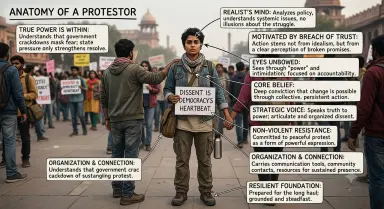
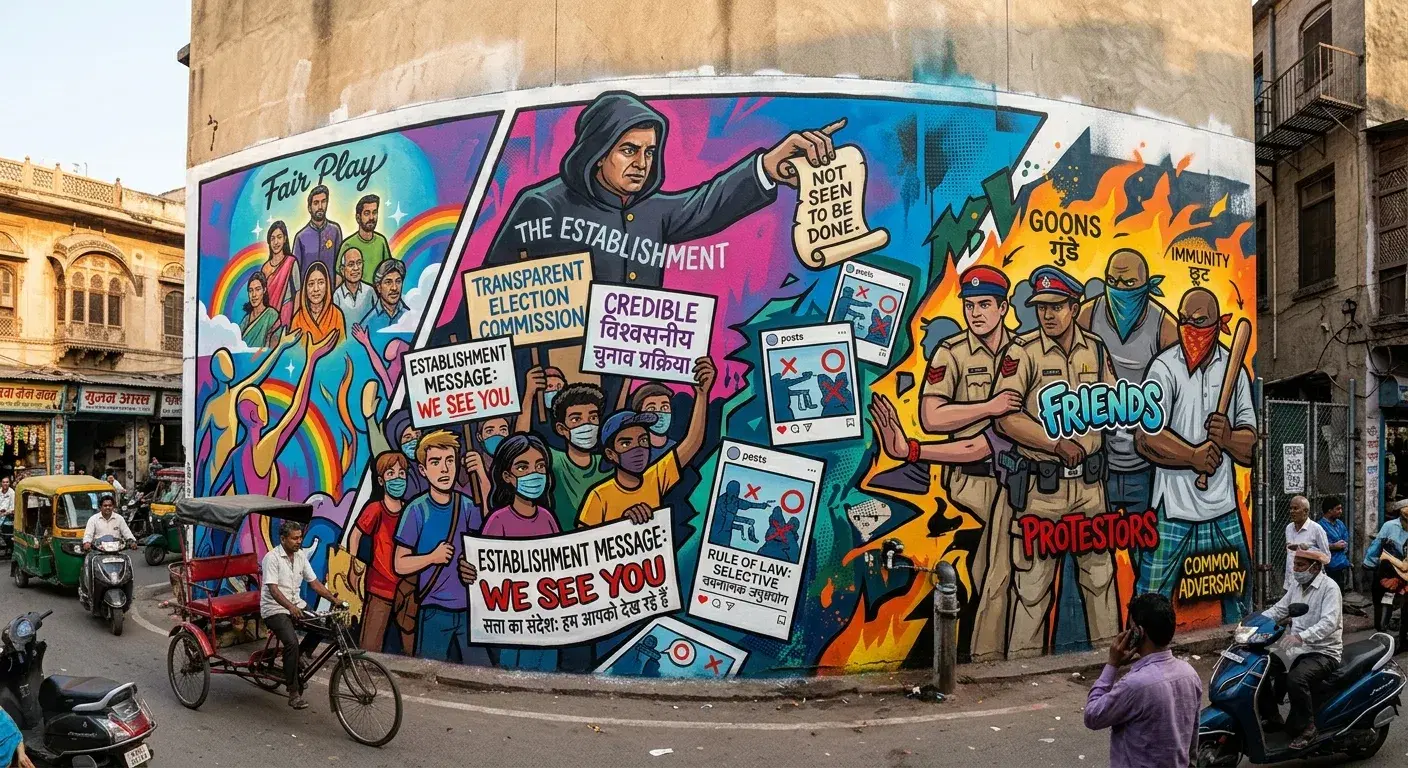
Fair play, I know, is a notional concept. In real life, justice is neither done nor seen to be done. That is the clearest message the establishment keeps sending the disgruntled youth who want a transparent, fair Election Commission and, with it, a credible election process.
Whether
the Cockroach Janta Party (CJP) represents Gen Z is a false debate. I’m not Gen
Z, and what they seek through this protracted movement resonates with me. The
old tricks that worked in the past now backfire.
Delhi’s
Special Executive Magistrate Court has remanded leaders Saurav Das and Ashutosh
Ranka to five days of judicial custody. They had jumped the locked gates and
police barricades to enter Jantar Mantar, holding the national flag and raising
slogans, a day after Delhi Police de-notified it as an authorised protest site.
The FIRs charge them with trespassing, unlawful assembly, breach of a peace
bond, disobeying official orders and obstructing public servants.
Contrast
this with the goons used for political ends, whose treatment has caused what is
politely called political debate and is really outrage. Ravindra Govinda and
others, identified by police as members of the Hindu Raksha Dal, were arrested
after a viral video showed them hitting students, including a girl, at the CJP
protest. Govinda had made his intentions clear in a video post. They got bail
within a day or two and were welcomed back with garlands, as if returning
triumphant from battle.
Right-wing
goons have attacked protestors many times in full public glare, in the benign
presence of police who did little to stop them. In this case, police acted only
after the video went viral.
The
two cases are legally different. The goons were arrested under standard
criminal sections for assault, while Saurav and Ashutosh were remanded for
violating a peace bond they had signed earlier. But the goons are seen as
friends of the cops, united with them against a common
adversary—the protestors, and so enjoy
a sort of immunity. The rule of law is being applied selectively, and hundreds
of reels and posts have made that public.
The
moot point is that the government and the police have failed to read the
popular mood. Such tactics will only worsen the situation and feed a prolonged
struggle.
The
leadership is silent, seen lately only reading prepared texts at curated events
and summarily ignoring the raging protests. The voice of youth dismissed as a
provocation orchestrated by opposition parties.
Home
Minister Amit Shah has labelled the protests localised, “fabricated media
events” and “Jhooth Ki Goonj” (the echo of lies). Distinguishing the voice of
the nation from gathered crowds, he challenged their legitimacy: “You cannot
become the voice of the nation merely by mobilizing the cadres of fourteen
parties to gather a crowd... I urge the Congress party to realize that the
voice of the nation also resides in fields, farms, villages, and remote forests
where you have no reach.”
Point
taken. But if that were so, why was all of Delhi paralysed for a Jhooth Ki
Goonj? The shutdown was unprecedented: more than 250 trains cancelled,
including 75 long-distance Mail/Express services; 45 key Delhi Metro stations,
including hubs like Rajiv Chowk, New Delhi and Central Secretariat, closed
completely; and 50,000 personnel deployed, from local police and specialised
central units. It prompted Chief Justice of India Surya Kant to observe, “Don’t
use a hammer to kill a fly.”
The
protest cannot be suppressed by force, not for long. To solve a problem, the
establishment must first recognise that there is one in the Election
Commission, and that people at large have a fair idea of it. Denial will only
aggravate the situation. Justice needs to be done, and seen to be done.