


The Immortality Trap
World leaders don't live by ikigai. Power is stressful and demanding; it makes them glow even as it ages them, concealed by top-tier healthcare. Vanity and ambition outlast the person, driving leaders to write histories that cement their legacy. But God doesn't discriminate. Death comes for everyone. It remains the great leveler.
What makes the world's most powerful people
vulnerable? Mortality. Especially those over seventy who cling to power and
want more of it.
"Biotechnology advancements and
continuous organ transplants could make people live younger, even achieve
immortality," Vladimir Putin told Xi Jinping in September 2025, at a
Beijing event marking 80 years of the end of World War II. Xi wasn't fully
convinced, though he noted that seventy is still "young" and
suggested lifespans could reach 150 within the century. Donald Trump, over
eighty, and Narendra Modi, a vigorous seventy-five, face the same reckoning.
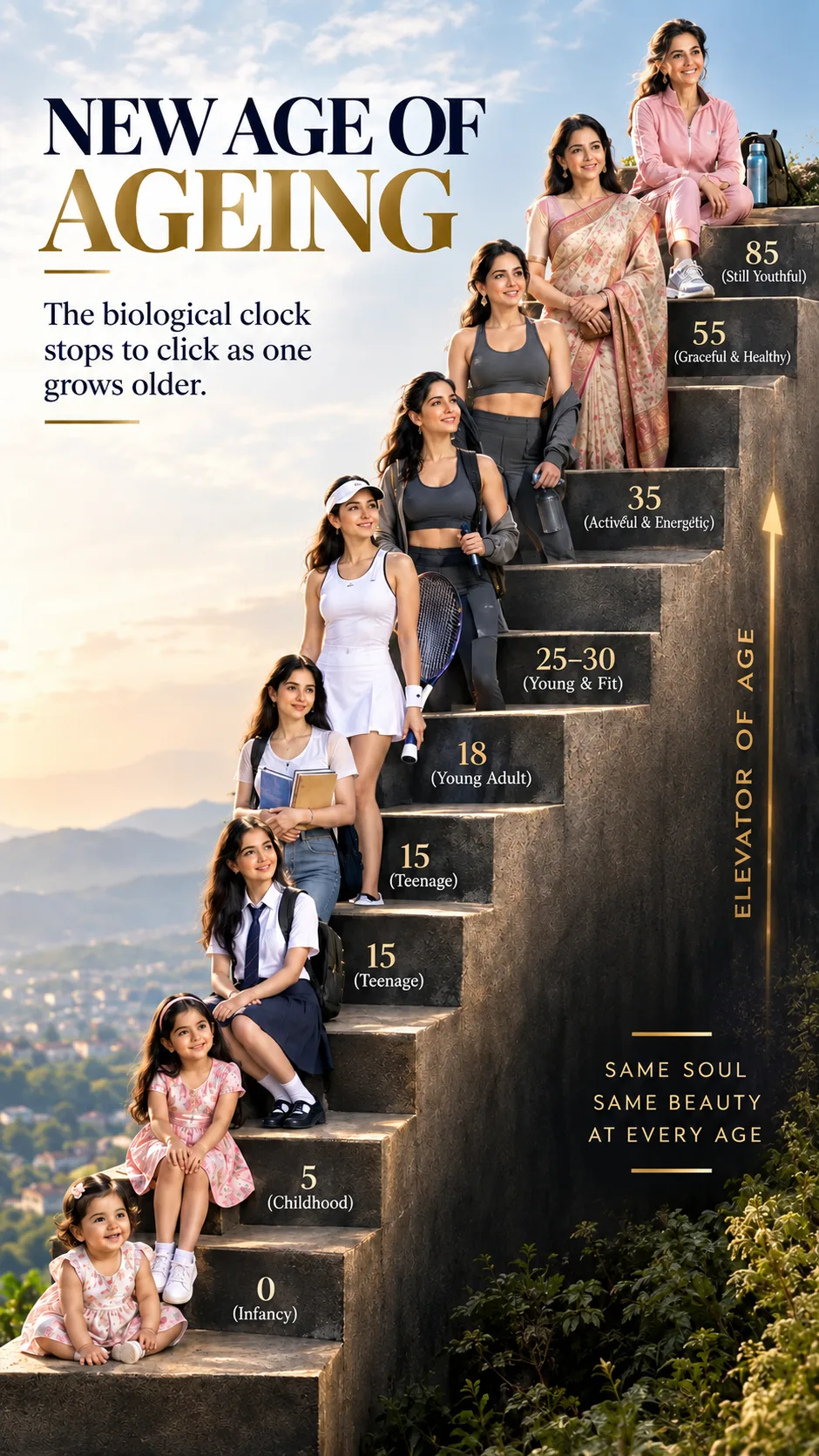
Humanity is aging, with older adults now the
fastest-growing age group. And aging isn't linear — it arrives in bursts, with
distinct accelerations around 44 and 60. No one feels this more acutely than
aging world leaders.
We are nowhere near true immortality, but lifespans have grown dramatically over the last century, and Xi's prediction of 150-year lives isn't far-fetched. The gains come from extending "healthspan" — years free of chronic disease — and from reversing cellular aging in the lab. Nanobiology now turns stem cells into "mitochondria factories," doubling the energy supply to damaged cells and slowing decay from within. Biological immortality remains cellular, but we've already achieved a kind of virtual one: neural language models can ingest a person's social media, voice, and writing to build a posthumous digital persona, while VR and spatial video preserve tangible, interactive 3D records of a life. It isn't real. It's myth, inspired by a past that's well in the past.
Aging is now treated as a medical condition
rather than an inevitability, says David Sinclair, a geneticist at Harvard
Medical School — because it's the root cause of most major disease. One path
forward: the Yamanaka factors, four master genes discovered by Japan's Dr.
Shinya Yamanaka in 2006, which can reprogram mature adult cells back into
flexible, embryonic-like stem cells.
Bryan Johnson, a centimillionaire tech
entrepreneur nearing fifty, calls his project "the most significant
revolution in the history of Homo sapiens." His life-extension system,
Blueprint, tracks over a hundred health parameters through caloric restriction,
a strict vegan diet, tailored exercise, and obsessive sleep optimization — down
to a device monitoring his nighttime erections.
But is this a life anyone actually wants?
Johnson's regimen doesn't grant immortality — only extension. He may out-rally
his grandchildren on a tennis court, but at what cost?
Japan offers a gentler answer: ikigai, "a
reason for being" — not one grand ambition but small, continuous rituals:
tending a garden, seeing friends, fulfilling one's place in family and
community.
World leaders don't live by ikigai. Power is
stressful and demanding; it makes them glow even as it ages them, concealed by
top-tier healthcare. Vanity and ambition outlast the person, driving leaders to
write histories that cement their legacy.
But God doesn't discriminate. Death comes for
everyone. It remains the great leveler.