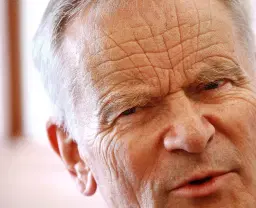
Sonia Gandhi: will she deal with real issues in her memoir?
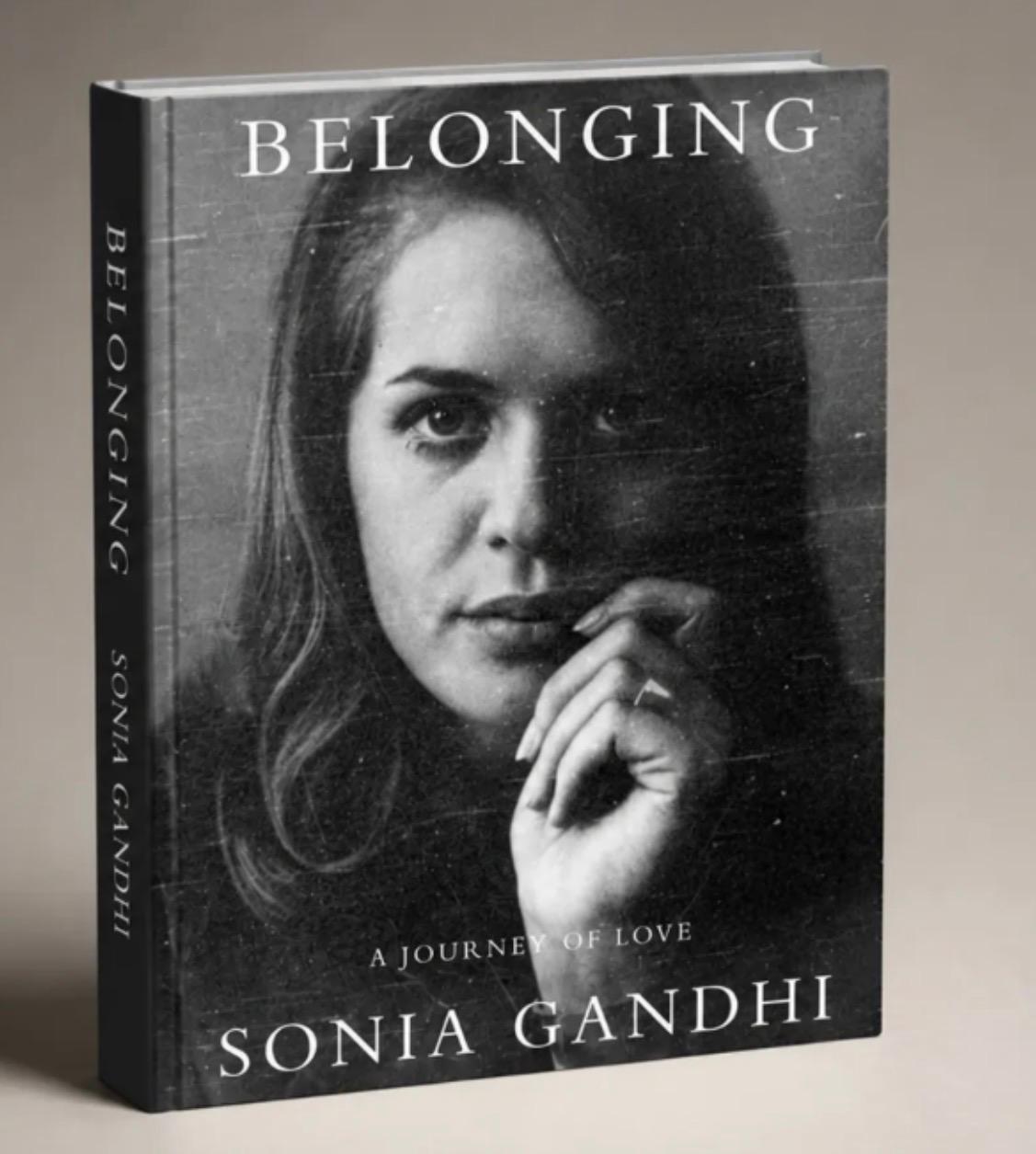
Sonia Gandhi's memoir—Belonging: A Journey of Love—will
be published by someone else in November after Penguin Random House India chickened
out.
Now that we know her book, described as a
"personal and political 544-page memoir tracing her extraordinary
transition from a small-town Italian village upbringing to the epicenter of the
Nehru-Gandhi political dynasty," will see the light of day this November.
I wonder whether Sonia will talk about the key
episodes that have shaped my view of her, not just as a politician but as a
woman and mother. It entailed a sacrifice for an Italian to live in India, but
also a privilege. She was catapulted to power under tragic circumstances and
was, perhaps, destined to lead an extraordinary life. She did make some
significant choices, tough decisions, and I hope her book sheds some light on
them. And I hope it's not merely a well-written treatise thrown as a party,
with no explanations on the invitation.
I hope for some explanations. And before I seek them,
this needs to be said: hating Prime Minister Narendra Modi doesn't necessarily
mean loving Sonia Gandhi, or vice versa. They are both successful people, and
we mustn't be in awe of either.
- Why
did you refuse to become prime minister in May 2004? It's claimed this was
primarily due to strong family opposition—Rahul and Priyanka were opposed
out of concern for her personal safety, amid intense political controversy
over her foreign origin. Sonia claimed it was her "inner voice"
and "conscience" telling her to humbly decline—but there seem to
be extraneous factors at play.
- While
you didn't become prime minister, you created an extra-constitutional
body, the National Advisory Council, and ruled by proxy, curtailing the
position of Prime Minister Manmohan Singh—this was not particularly
democratic. Sanjay Baru, a former media adviser to Manmohan Singh, alleged
in his memoir (or perhaps simply stated the obvious) that Singh allowed
his authority to be undermined by Sonia, then president of the Congress
party and, more importantly, standard-bearer of the Nehru-Gandhi dynasty.
Baru famously wrote: "There cannot be two centres of power. That
creates confusion. I have to accept that the party president is the centre
of power. The government is answerable to the party." You had all the
power but none of the responsibility. Perhaps your book will shed some
light on this partnership, skewed so heavily in your favour.
- Perhaps
PV Narasimha Rao was not as pliant as Manmohan Singh. Sonia and Rao
reportedly shared a complex, if outwardly cordial, relationship that grew
increasingly strained during his tenure as prime minister, 1991 to 1996.
After Congress lost the 1996 elections, Rao was sidelined by the party
leadership—read: Sonia. When he died in December 2004, his body was
brought on a gun carriage not allowed inside the Congress headquarters on
Akbar Road in Delhi, and gun carriage was parked outside the main gates.
It's reported that, against his family's wishes, Rao was denied a
cremation in Delhi, unlike other former prime ministers, and that it was
Sonia and her trusted aide Ahmed Patel who persuaded Rao's family to take
his remains to Hyderabad for last rites instead. Will Sonia talk about it?
- Why
did she show her sister-in-law, Maneka Gandhi, the door—not just from the
family, but from the party? Varun, Maneka's son and Indira's second
grandson, was reportedly willing to join Congress if his mother was
welcomed back too. When the doors stayed shut, both were forced to join
the Bharatiya Janata Party.
- While
she closed all doors on Maneka, she never gave up on her son Rahul.
Congress has been made into a Gandhi fiefdom; many senior leaders quit the
party over this. Ghulam Nabi Azad, for instance, blamed Rahul Gandhi's
"immaturity" and "childish behaviour" for the party's
decline, citing Rahul's tearing up of a government ordinance in 2014 as a
key factor that undermined Prime Minister Manmohan Singh's authority and
contributed to the UPA's electoral defeat.
- The
National Herald case needs clarification from her—an ongoing legal dispute
involving top Congress leaders, primarily Sonia and Rahul Gandhi, over
allegations of financial fraud, criminal misappropriation, and money
laundering. [The National Herald newspaper was established in 1937 by
Jawaharlal Nehru and published by Associated Journals Limited (AJL). Over
the years, AJL accumulated an interest-free debt of ₹90.25 crore owed to
the Congress party. In 2010, a closely held, non-profit company called Young
Indian (YI) was incorporated, in which Sonia and Rahul Gandhi held a
combined 76% stake. Congress transferred AJL's ₹90.25 crore debt to YI for
just ₹50 lakh. YI subsequently acquired almost all of AJL's shares,
effectively gaining control of AJL's real estate assets across India,
estimated to be worth over ₹2,000 crore.]
- Why
was Ottavio Quattrocchi let off in the Bofors kickbacks case by the CBI?
Why couldn't they procure legally sustainable evidence after decades of
litigation? Was proximity to Sonia not a factor? Quattrocchi, an Italian,
worked as a representative for the Italian multinational firm Snamprogetti
[a major Italian engineering, procurement, and construction (EPC)
contractor and technology provider specializing in large-scale onshore
projects for the energy, refining, and fertilizer industries, later acquired
and fully absorbed into Saipem] in New Delhi in the 1970s and '80s. During
this time, he and his wife became part of the inner social circle of Sonia
Gandhi and her husband, former Prime Minister Rajiv Gandhi.
- Why
was Union Carbide CEO Warren Anderson, after being arrested and quickly
released on bail in Bhopal in December 1984, allowed to leave India by air
on the orders of high-ranking government officials?
- There's
a broader criticism that Congress is in a deplorable state because of the
Gandhi family's overarching influence—its fiefdom. Sonia only made it
stronger; she turned out to be a bigger dynast than her mother-in-law.
Perhaps she'll help us understand why.