


Parul Sharma: The Space She Kept
Parul Sharma is an
artist. Her medium, to the best of her knowledge, is photography, but I see art
in varied aspects of her life — for instance, in the way she has organised her
space. Sitting in her living quarters, I get the impression she's in control.
Art, objects,
furniture — wood, metal — interspersed into a symphony playing her
quintessential tune. The contrast of distinct objects, some with bold colours
and textures, blends beautifully in the space. Table, chair, a set of
armchairs, a candle burning for its aroma on a table in front of a glass
window, daylight filtering in through the bamboo chick. The mirrored wall
opposite the glass wall that overlooks the dense foliage makes the big room
look bigger, and gives it a kind of reflective quality. I like the way Parul
rests picture frames on the floor against the wall. She likes to showcase works
by her friends, fellow artists.
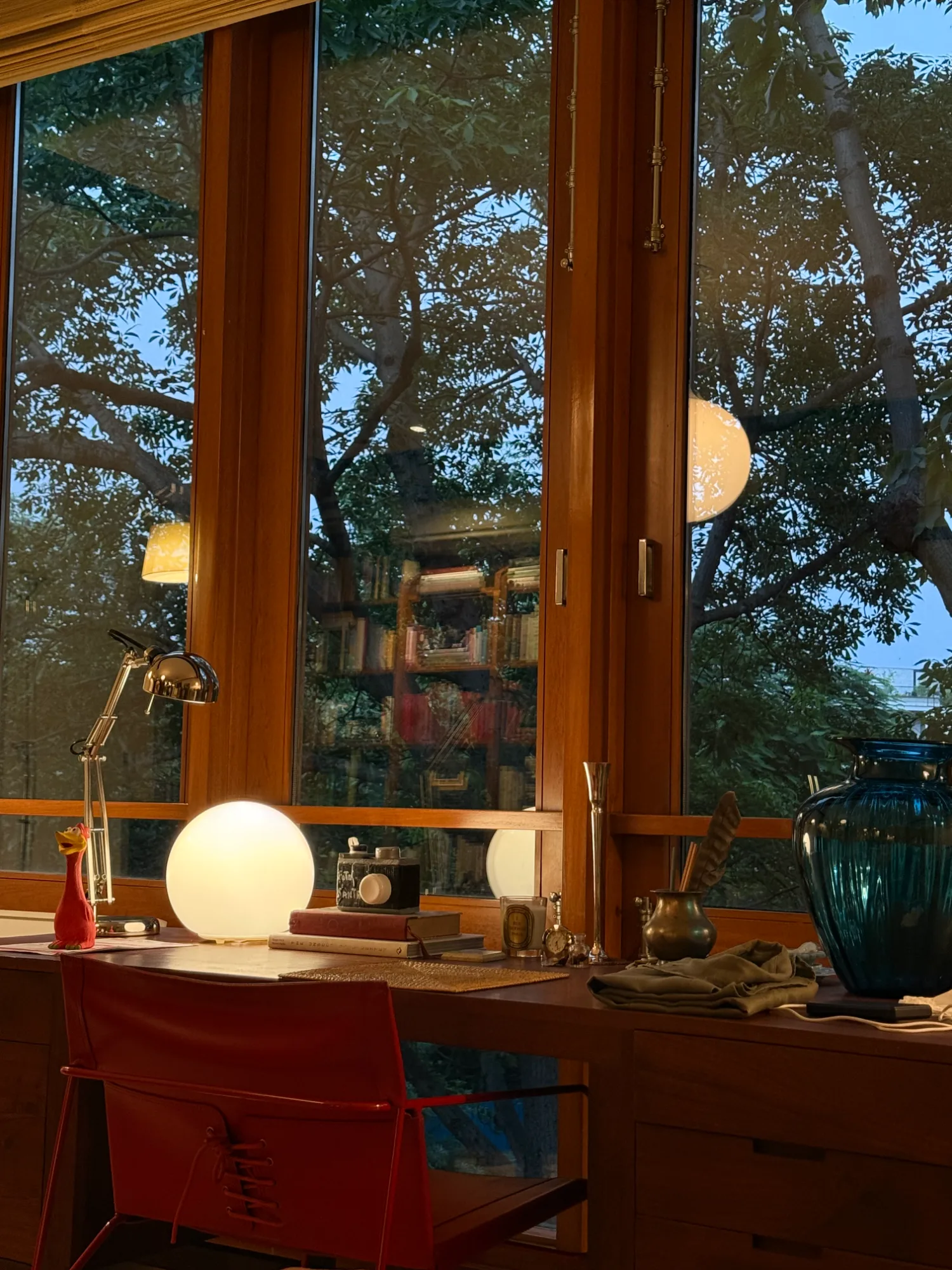
Procured from all over the world, these objects, books, seem to be in conversation in her space. Her set of experiences — growing up in Delhi, living in Germany for five years, her time with Tony Jesudasan, who described her as "the only woman he loved" inscribed by him in the copy of Poems for Love lying on her desk— and now, the post-Tony phase, are all there in the space, like layers of bark on a tree. Aesthetics is a way of life in her space.
After a prolonged
period of grief — it manifests differently in different people — the shaping of
tomorrow is happening. Parul is mother to an independent
daughter, Preetika, her sounding board, her support system.
The decluttering is
an indication of her approach to life — an eye for detail, yet an eye still on
the larger picture. A certain clarity in dealing with objects is indicative of
not getting consumed by foggy emotions. Sitting in her space with her, on a wooden
armchair that belonged to her mother, soaking things in, sipping coffee,
listening to music playing in the background, illumination from a pedestal lamp
that looks like a fishing rod — it gives me a sense of getting to know her
better, and of getting to know myself better too. Artists are a mystery
unfolding to themselves in a conducive space.
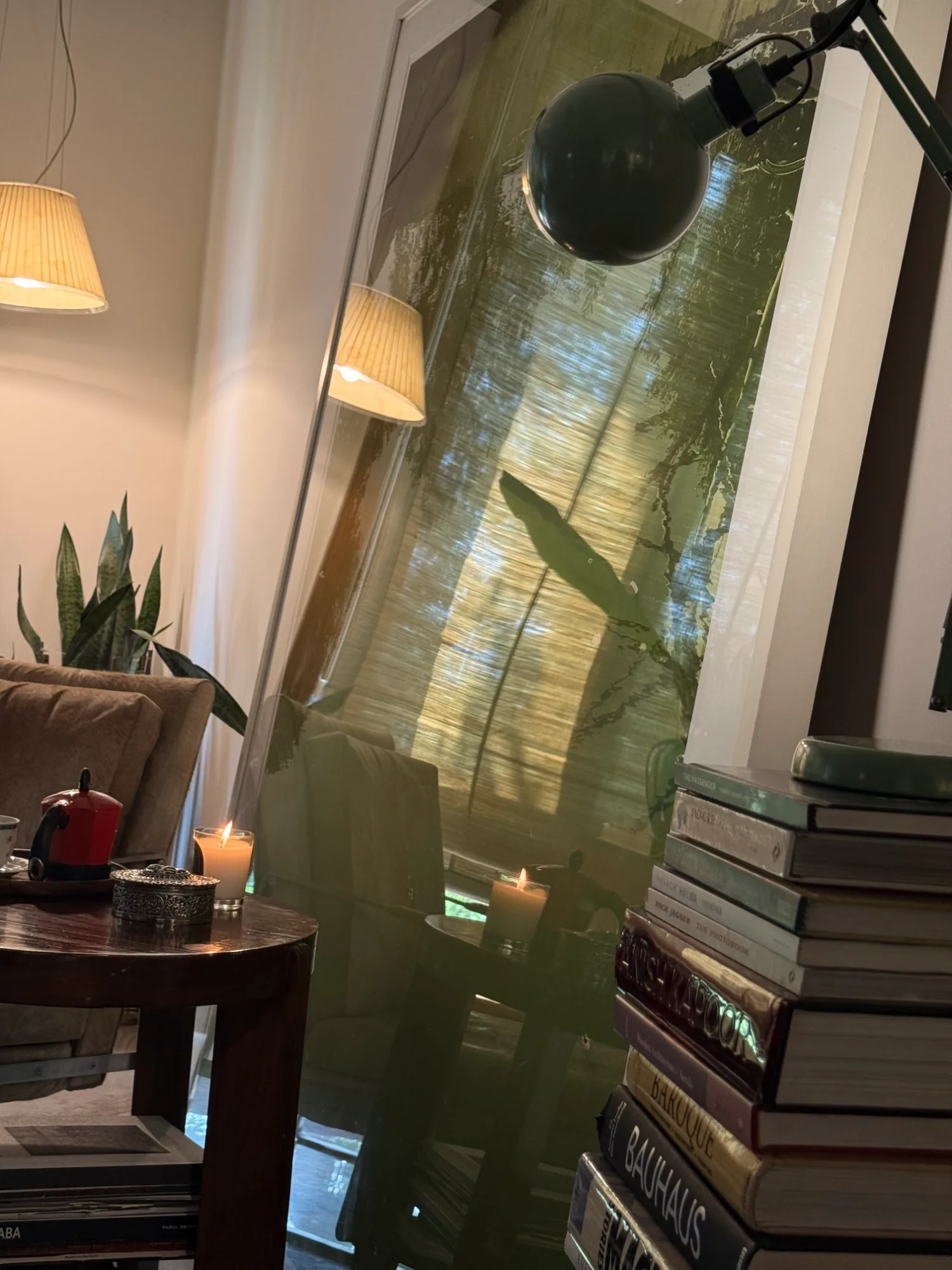
We talked about so
many things — loss and the inheritance of loss, the privilege laced in pain,
music, anecdotes, over a floppy omelette and avocado salad. The shaping of
tomorrow still carries so much of Tony; his absence has a profound presence,
and it's empowering, inalienable. There's a gratitude in the air that he lived
in this space. Loss and grief have a silver lining — they can be empowering.
The best way out of
any situation is through it. There are no shortcuts in life, and shortcuts only
convolute the path ahead. Tomorrow is hers to make. She abhors sympathy, let
alone false sympathy — the kind that hides a motive, that stems from the belief
that she's fragile. She's empowered by her vulnerability, and that makes people
uncomfortable, particularly erstwhile friends. The change shows in her new
friendships, ones not intoxicated by the hangover of the past. And in the new
studio she's building on the rooftop.
Parul took her time
— she preserved the past as a living nostalgia, while shaping the future
literally brick by brick. There's no break, only greater continuity. Death can
only sever things on the physical plane; bonds grow stronger in absentia. She
is not alone in that house.