
Anatomy of a Protester
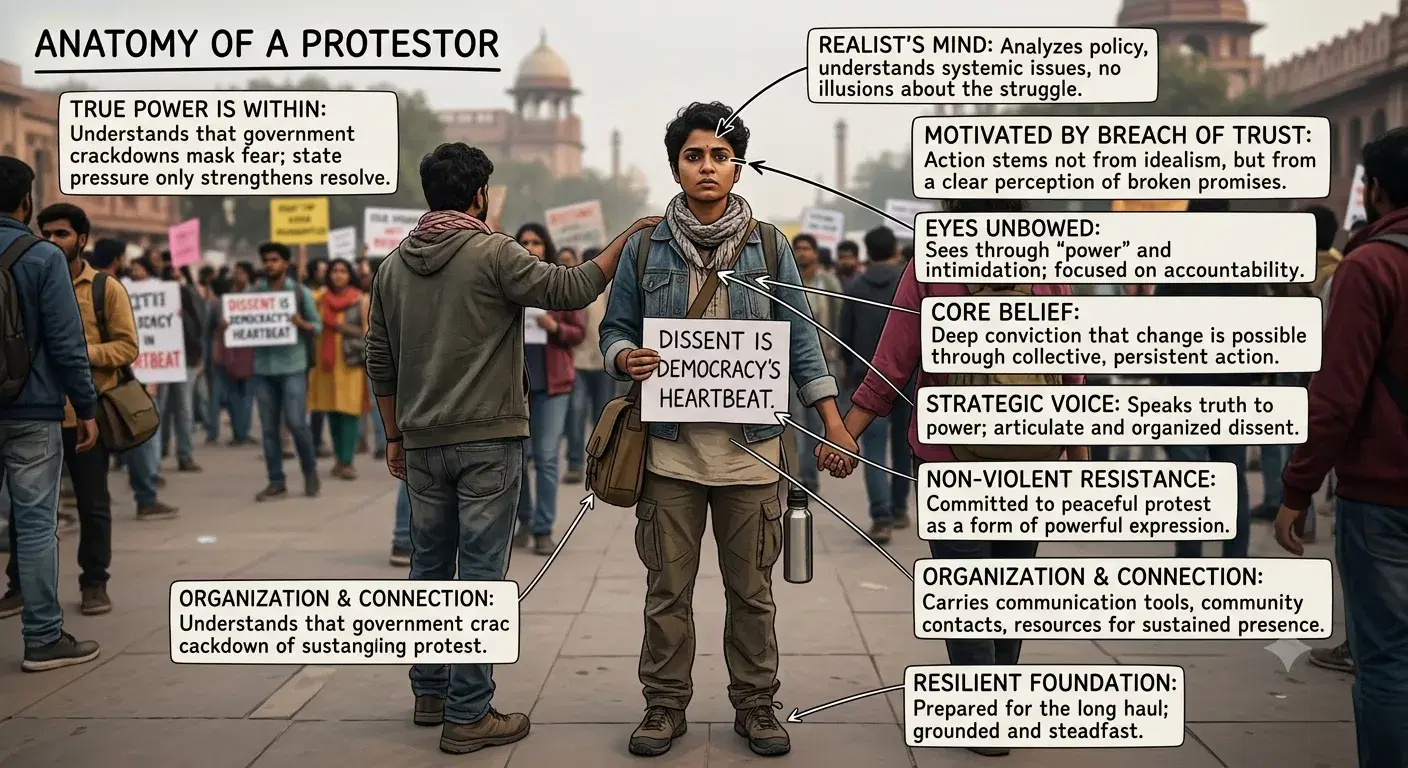
There’s no gender divide here. These are people who feel let down, yet still feel privileged to be Indian. They know their rights and they know their privileges. They have a worldview. They’re well connected, and they’re not starry-eyed idealists but realists. They don’t bow to power. What they see is a breach of trust, and they’re not scared. They believe they can bring about change, and they believe the government is the one that’s scared. Eckhart Tolle put it best: “Power over others is weakness disguised as strength. True power is within, and it is available to you now.” They may well be right.
They
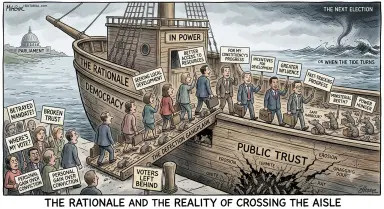
have strong reasons to believe the Election Commission is compromised and is
subservient to the government. The apex court, in their eyes, has done little
to check this sinister cosiness and has failed as the custodian of the
Constitution. To them, that amounts to an undeclared Emergency under an
undeclared autocracy, and the government’s own actions have only confirmed it.
Each
of them also has an axe to grind, a personal story of a raw deal: a seat in a
professional college that never came, a job that went elsewhere, a shot at a
decent life. Growth and development, they feel, have stayed concentrated in
entrenched groups who already share power, don’t need more of it, and still
walk away as the beneficiaries. The status quo.
This
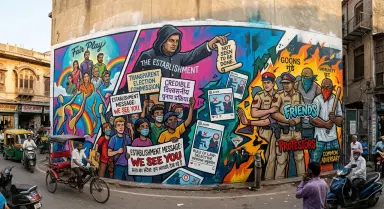
piece draws on a conversation with a gay man who has taken to the streets and
been detained by police three times in the past week or so, once for ten hours.
He has protested on behalf of the Congress party and the Cockroach Janta Party,
but he isn’t aligned with any group, only the cause. And that cause has united
the youth. Like him, many have found an immediate purpose that will shape the
future, and he’s determined to take this movement to its logical conclusion.
His sexuality once left him feeling isolated and cornered. For the first time,
he feels part of something larger: a common purpose, a mainstream that believes
in change.
The
old divisive playbook of religion, caste, creed and regionalism, along with the
scaremongering about things that will never happen, no longer holds them back.
Young people especially haven’t been taught to stop questioning. They see the
bigger picture, they’re connected through the Internet, and they’re hard to
fool.
This
is a dangerous situation, a time bomb ticking. The resentment is growing, and
every show of force to contain them only emboldens them. It gives them
encouragement and confirms that they’re right.
The
leaders stay quiet, as if nothing has happened or this is all routine. Or they
use their waning influence online to paint the resentment as a Western
conspiracy to destabilise India, and those seeking justice as anti-nationals.
It’s a hackneyed line, only brings them together.
The
establishment is hoping that if it can contain the protesters long enough,
they’ll lose hope of getting their demand, the resignation of the chief
election commissioner, and drift back to their homes and their lives, which
mostly means eking out a living.
The
establishment might be wrong. “This is just the tip of the iceberg,” he says.
“The iceberg is half the nation, the youth, the future.”