
EVERY CITY IN INDIA HAS A BARBER FROM BIJNOR
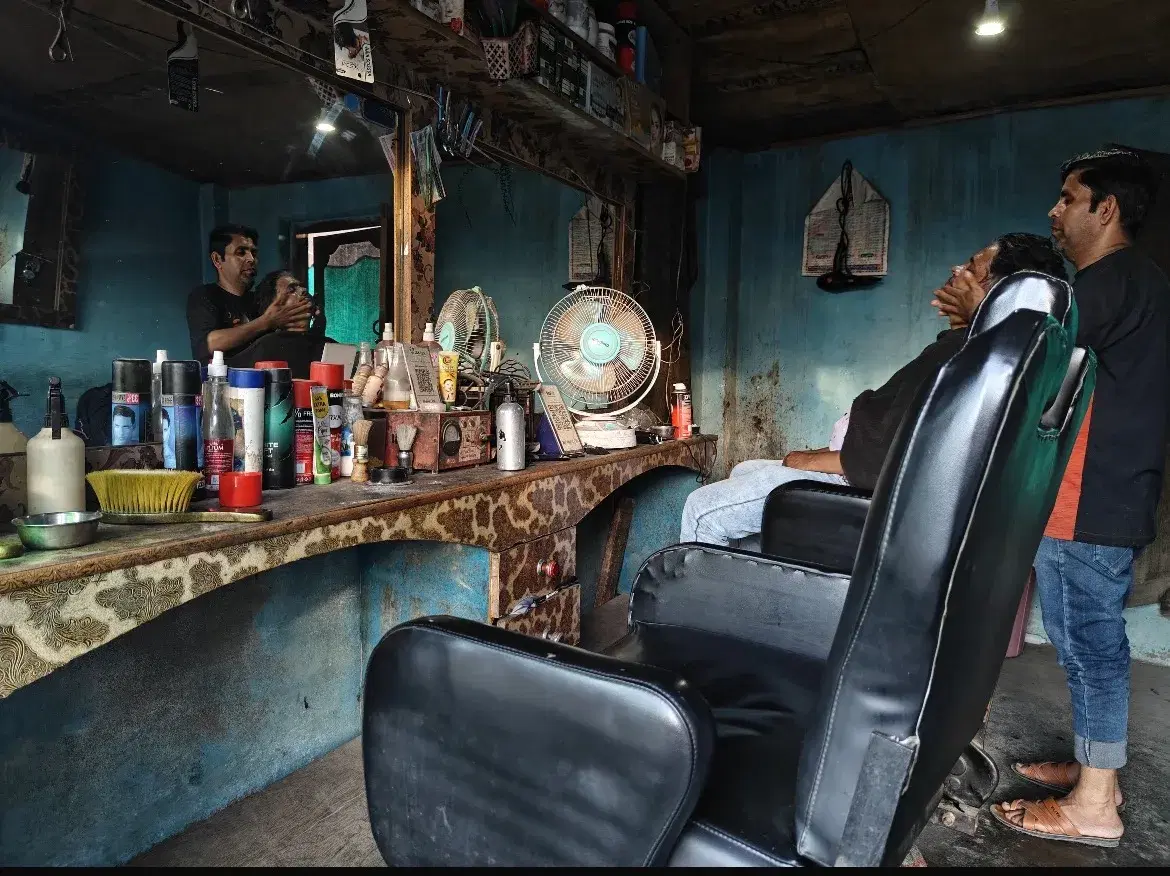
I push open the rattling glass door, and walk into a wall of warm, moist
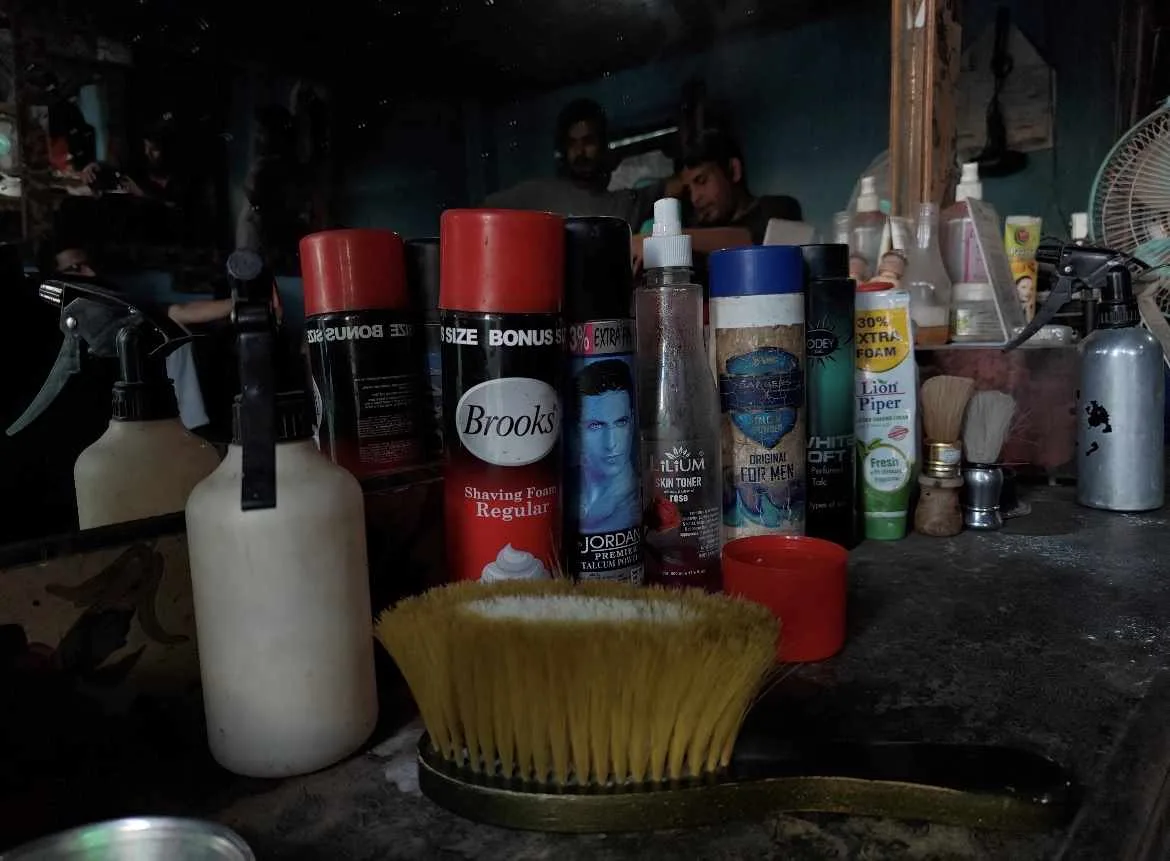
air - a dense, heavy brew of Barbicide, shaving lather and a particular rusty
smell of scissors. The fading blue walls are adorned with weathered mirrors, making the room
feel like a time capsule tucked away from the chaos of the city.
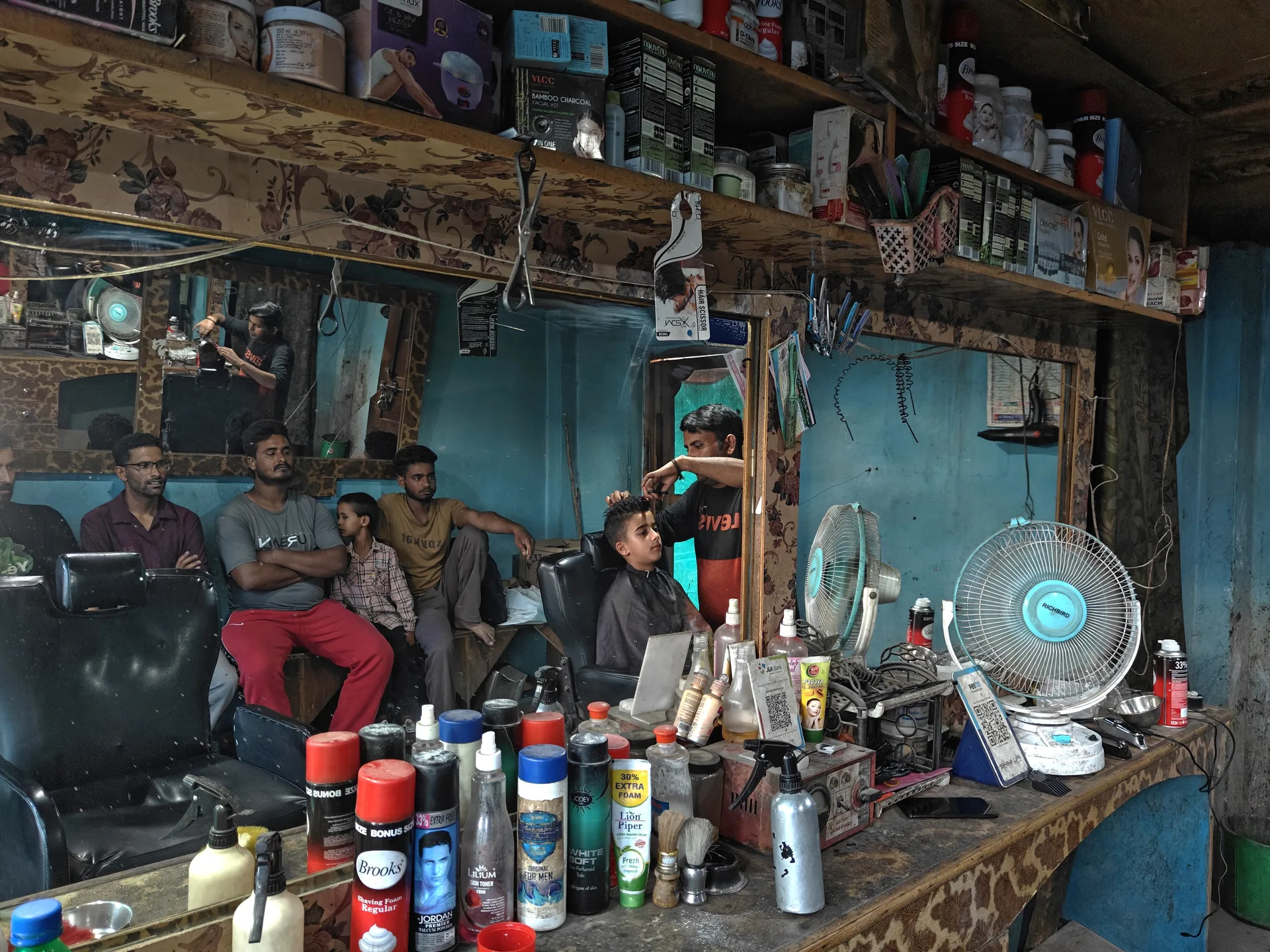
While sitting on a broken vinyl bench, against the wall on the far end, time passes slowly. Three other men are seated to my right. They are
debating local politics, family issues, sports and what not! One of them only
nods, gazing blankly into the mirror.
I can hear the trimmer buzz, scissors snip, the air in constant vibration while the hair falls in bunches and collects on the black-and-white checkered
floor in soft mounds.
Forty minutes have morphed into an hour and I'm getting impatient, my
determination to get a haircut falters.
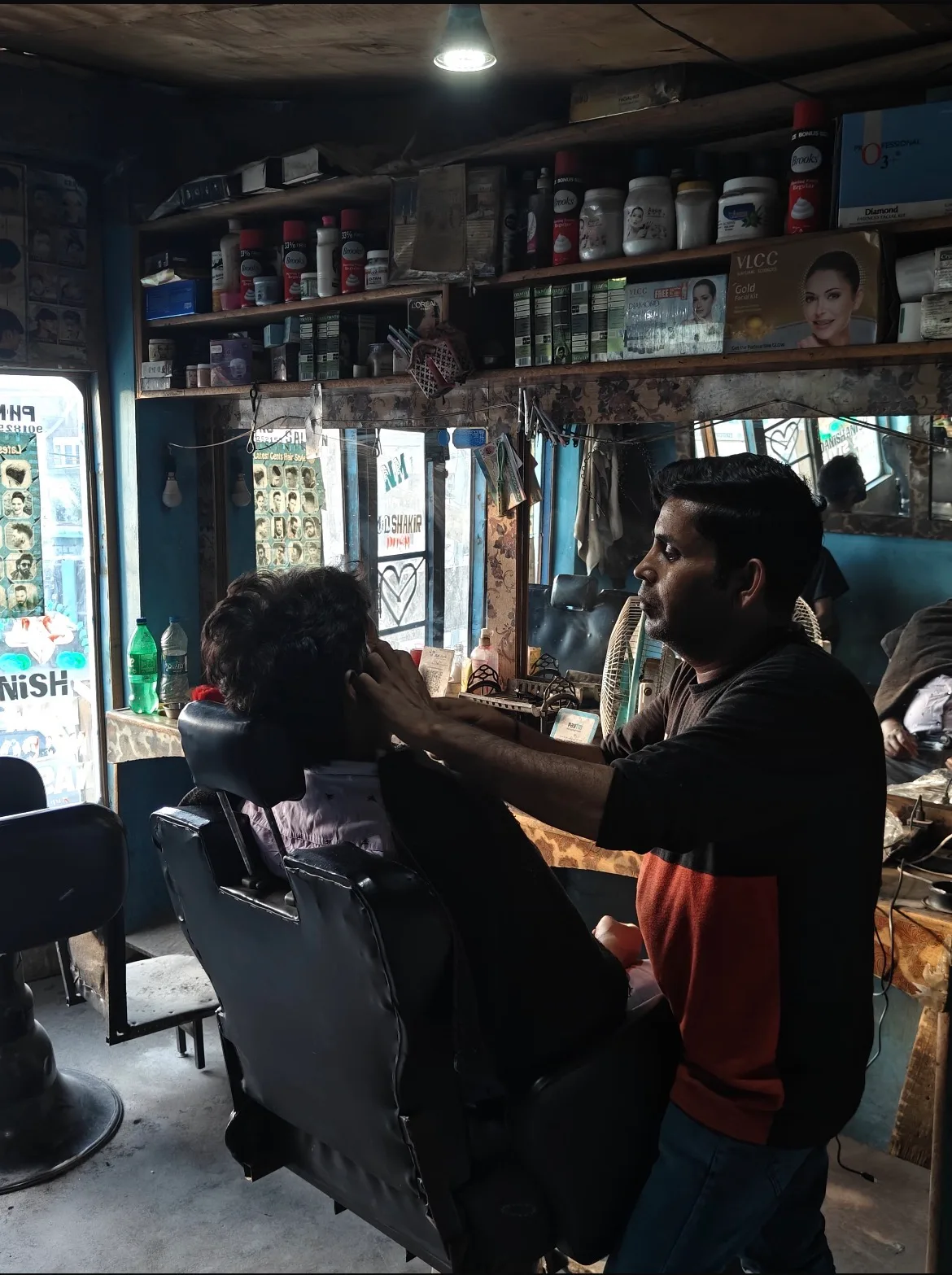
I hear, "Next." Finally, I’m the next. I sit on the empty
leather chair. The barber, a skinny man in a black t-shirt, doesn't seem tired.
Wearing a pair of skinny jeans, he’s as calm as a frozen lake. He has absolute
authority on six-inch scissors.
I'm "Maqsood," he says, with a single sharp nod. He ties a
striped nylon cape, flings it over my shoulders and tightens the paper collar
against my neck. And I submit to his calloused hands.
He pulls out his clippers and looks at my reflection in the mirror and
asks, “What kind of haircut do you want?". I tell him to trim the sideburns and bring some order to the vast chaos on my head. He nods and begins to cut. He talks about
his past, his story. He has been working here for twenty years and belongs to
Bijnor. "This is generational. My father held the scissors," he
tells me in Hindi.
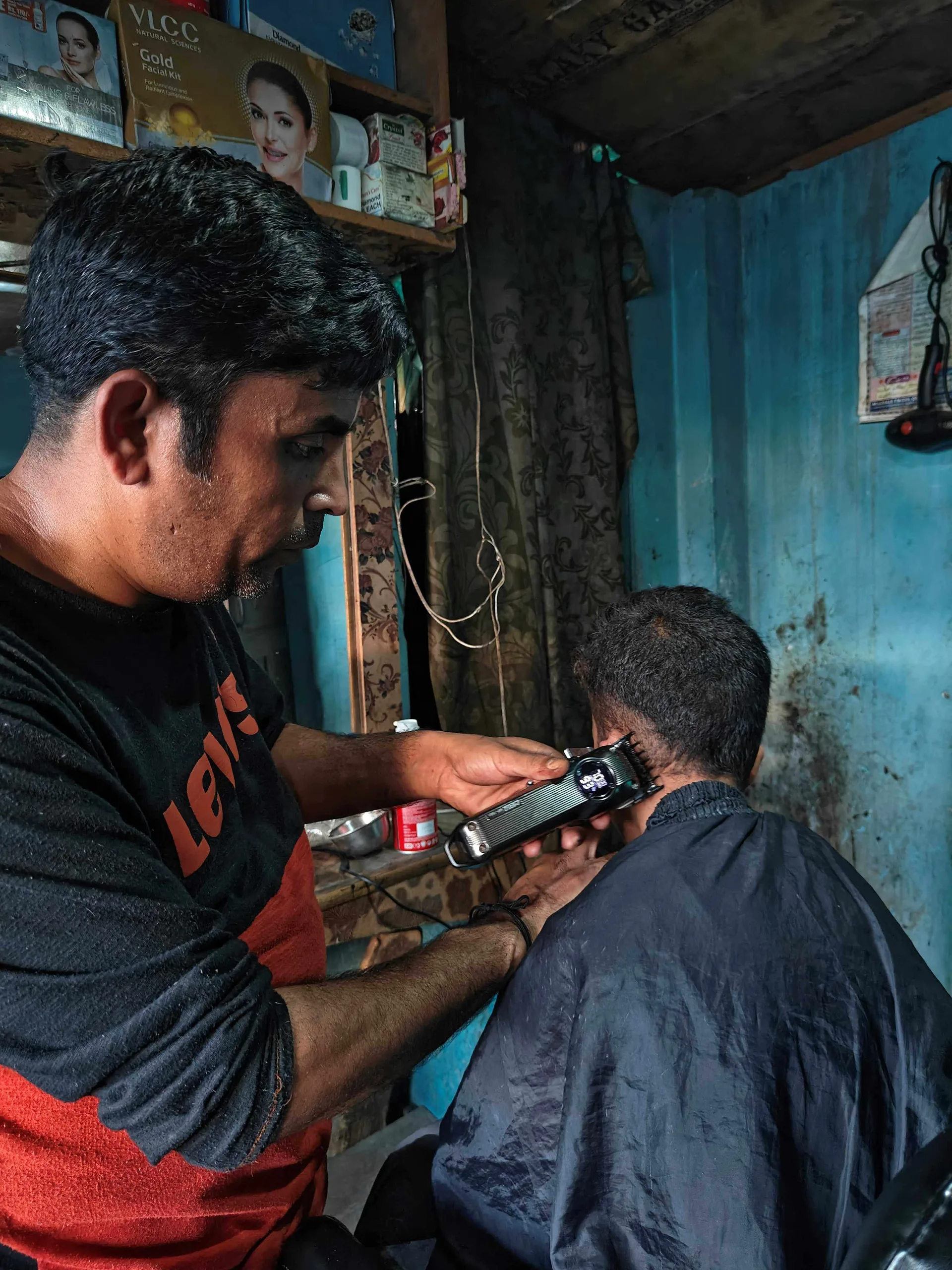
He tilts my head to inspect the hairline. "Almost half of all the
barbers in the country are from Bijnor,” he informs me, and adds, “it’s hardly a
choice, we inherit the razors and scissors and spread across the
country.”
The clippers are switched off, time to get a shave—he makes a thick lather
on my neck. I suddenly can't breathe. I hear nothing but raw steel playing in
the groove an inch from my jugular vein. I see his wrist reflected in the
mirror, moving confidently. There’s zero margin for error.
In a swift motion, Maqsood takes off the cape. After conducting a
survey in the mirror, satisfied, I hand him a 50-rupee note. Maqsood begins
to sweep the floor, as he calls out "Next” again. “Give me three weeks,” I say and smile. Before he can react, I open the door and leave.