

Unkept Promises: Tea, Tarps, and the Wait for Citizenship
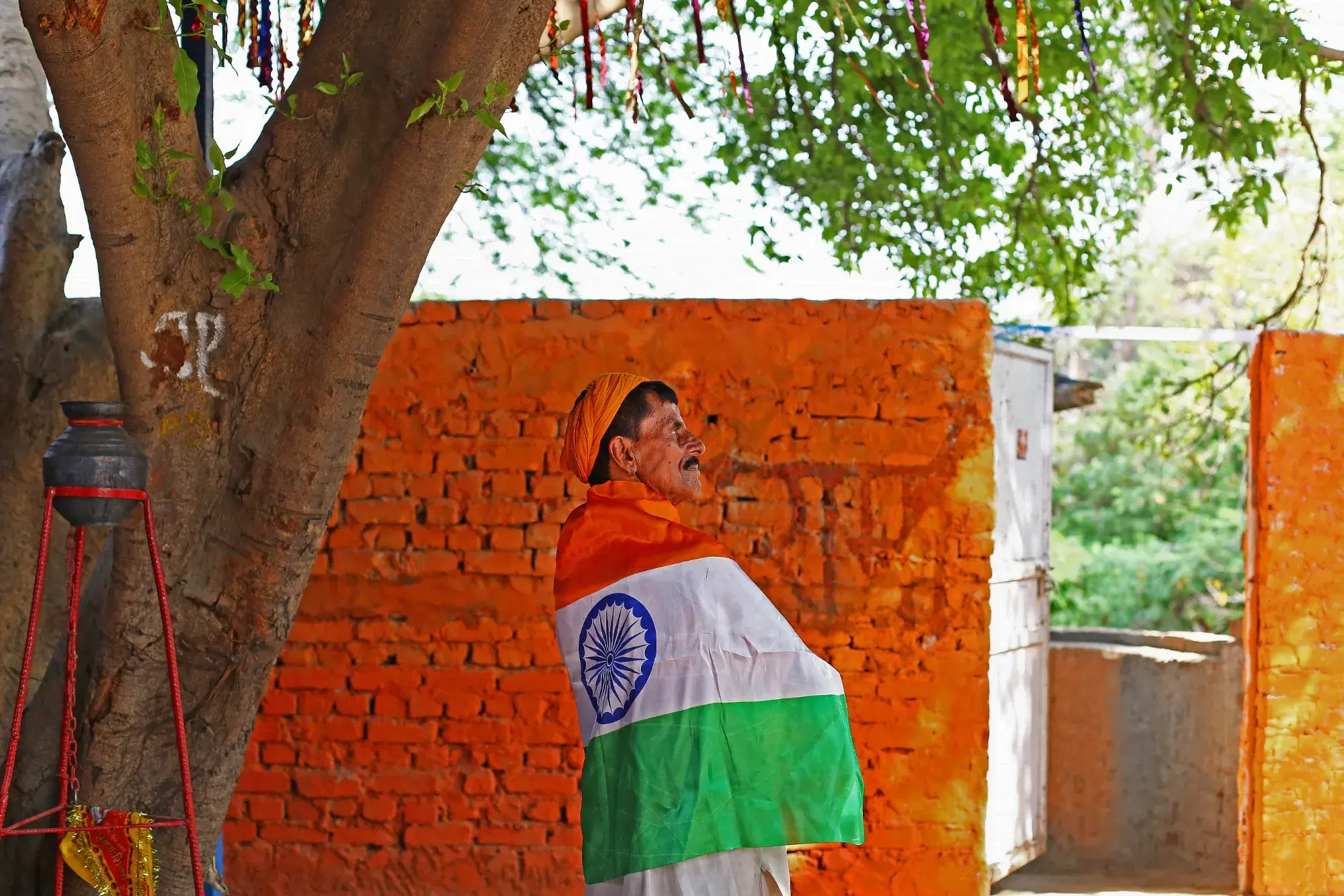
This is the unofficial camp of Pakistani Hindu refugees near Majnu ka Tilla, Delhi. They escaped to India because they were persecuted in the name of faith in their homeland. Their life remains a struggle.
The sandy dust of the banks of the river Yamuna not only enters your shoes but also your throat — a tangible reminder of the frontiers of the ever expanding city of Delhi.
We, the photographer and I, walked through a huge labyrinth of makeshift stalls, made of raw bricks, covered with tarps. This is the unofficial camp of Pakistani Hindu refugees near Majnu ka Tilla. They escaped to India because they were persecuted in the name of faith in their homeland.
They have been living here for years, trying to make India their home. All they have managed is to live like a refugee, one day at a time, making their ends is a constant struggle. Consuming tea and the trade of loose kirana goods seem to be their lifeline.
A cluster of cramped stalls lines along the paved path. One of them belongs to Hiralal, who was eleven years old when the India-Pakistan partition happened in 1947. His aged body is sprawled over a cot. Badal, his son, runs the kiarana shop. His wife has a tailoring stall in the same lane, she stitches kurta-pajamas for two hundred rupees apiece.
Hiralal did not come at the time of the partition, but nearly 60 years later, in 2015, he undertook a one-way trip to Haridwar. He carried the burden of transgenerational trauma, which time couldn’t heal due to repeated violent communal persecution in Sindh. Finally, they were forced to flee.
He couldn’t escape with the whole of his rather big family. Out of 13 children, only 9 could cross the border to India, the rest are still stranded there. They often connect over mobile phones, though, connection is unreliable. The border has divided his family and they are unlikely to reunite.
They don’t have the luxury to mourn about the loss, for living here too is a struggle for survival, the struggle goes on unabated.
The more one stays in the settlements, the contradictions become stronger. The pursuit of joy has caused them a lot of misery. Some children wore government-school uniforms; schooling is notional, most of them were seen loitering around in the unpaved alleys.
The local pujari, also hails from Pakistan, sat outside a small makeshift temple, playing poker on his phone — easygoing, untouched by the existential anxiety that suffocates others in the settlement. The pujari arrived in 2013, before the cutoff year–2014, armed with the golden ticket of Indian citizenship.
Further down, one Tarachand, a middleaged man, sat inside an old shed, too fragile to offer real shelter from the monsoons. He shares the shed with his family–a wife and seven children. It's pathetic to live in subhuman conditions.
He, along with his big family, went for a trip, a long trek across the mountains of Uttarakhand and Himachal Pradesh in pursuit of spiritual solace. He returned back to Delhi without any respite.
All said and done, people like Tarachand are still hopeful that the Prime Minister Narendra Modi, like an angel, will one day come to their rescue.
Tarachand’s wife offered us mango juice. As she poured it in plastic glasses, I had a glimpse of her dull eyes. The harshness of existence was painted in her eyes.
Tarachand, visibly moved, told us in Urdu, “you will not feel like drinking it here in this filth, but we don't want you to leave without having something.” Spending time with him is unforgettable — a man with nothing, yet very hospitable. We drank the juice with a smile.
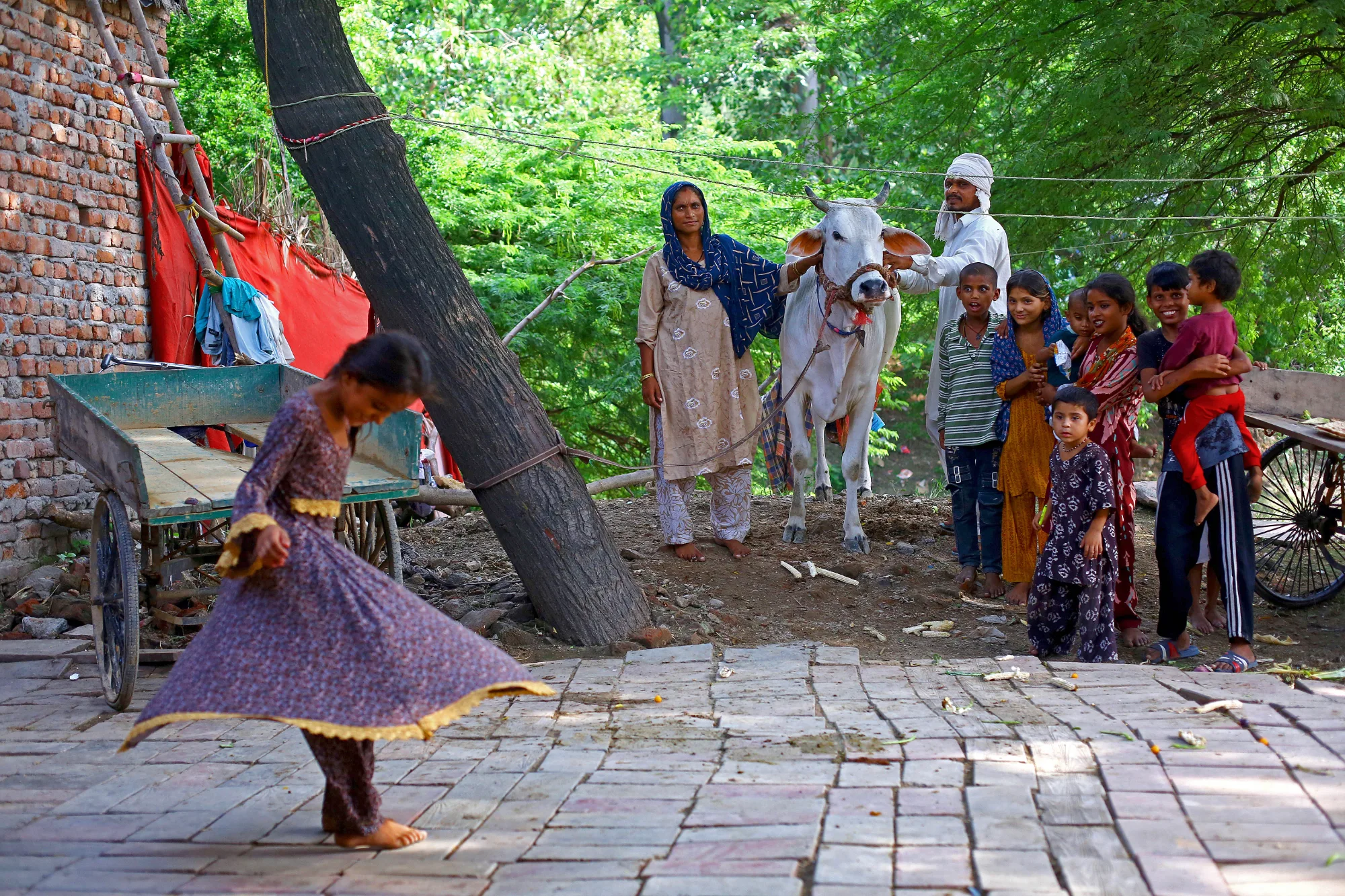
Outside the shed, Tarachand proudly introduced us to the family cow, Bhuri. The family gathered around it and pictures were taken against a rustic backdrop.
Before we left, we gave the kids a treat of cold drinks and chips. Their faces lit up with wild, uncomplicated joy.
We sat for another round of tea — this time at Badal's brother’s place. Hiralal, still, comfortable on his cot, a ninety-year-old man frozen, yet hopeful in the stateless purgatory.