



IS THE PHENOMEONAL SUCCESS OF THE CJP MOVEMENT AN EXAMPLE OF HYPER-POLITICS?
Social media, apart from having
such an integral existential presence, has become the most powerful political
tool. The number of people hooked on social media is approaching six billion
all over the world, which is four times the population of India, the most
populated country in the world.
It’s not an exaggeration to
say, elections are fought and won on social media, WhatsApp is potent propaganda
tool, data is wealth. That’s why governments want to keep a tab on social
media. The Indian government routinely makes tens of thousands of biannual data
and content removal requests to major social media platforms like Meta and X—is
only next to the American government.
But how can you tame the
Lernaean Hydra that social media is become? It’s bigger than any state, shapes
people’s views, belief system.
Strong public movements against
the governments, mostly by the younger people, the Gen Z, driven by social
media has galvanised so much political force, ushered regime-change in
some smaller countries like Nepal and Bangladesh; even forced the mighty the BJP government
in India headed by Narendra Modi to fire the education minister after
protracted struggle of students for a month.
The Cockroach Janta Party (CJP)
mustered the support of millions of youths in India in just a couple of months
of presence on social media. The youth descended on the streets of Delhi when clarion
call was made, hundreds and thousands of them marched towards the parliament. The
Jantar Mantar protests were spontaneous outpour of collective anger of the
youth; the government capitulated.

Anton Jäger, missed being a
Gen Z by three years, is a Belgian historian, writer, and academic researcher. His
book Hyper-politics: Extreme Politicization without Political Consequences helps understand social media driven movements. Hyper-politics to
him is the intense politicisation without institutional roots or ambitions.
Jäger analyses some key
features of such protests, across the globe, primarily the US. Referring to the
Black Lives Matter protests in the US, or for that matter the mob that stormed
the Capitol in January 2021. Jäger points out, though two movements were “morally….
worlds apart,” organisationally, had some “striking similarities.” They were fleeting
in duration, maintain no membership rolls and struggle to impose any real
discipline on their adherents. And when it happened, everything explodes, they
were beyond control, surged suddenly forward and, yet, no territory is taken. Such
modern movements, Jäger explains, are “concentrated and muscular, yet without
an internal metabolism”.
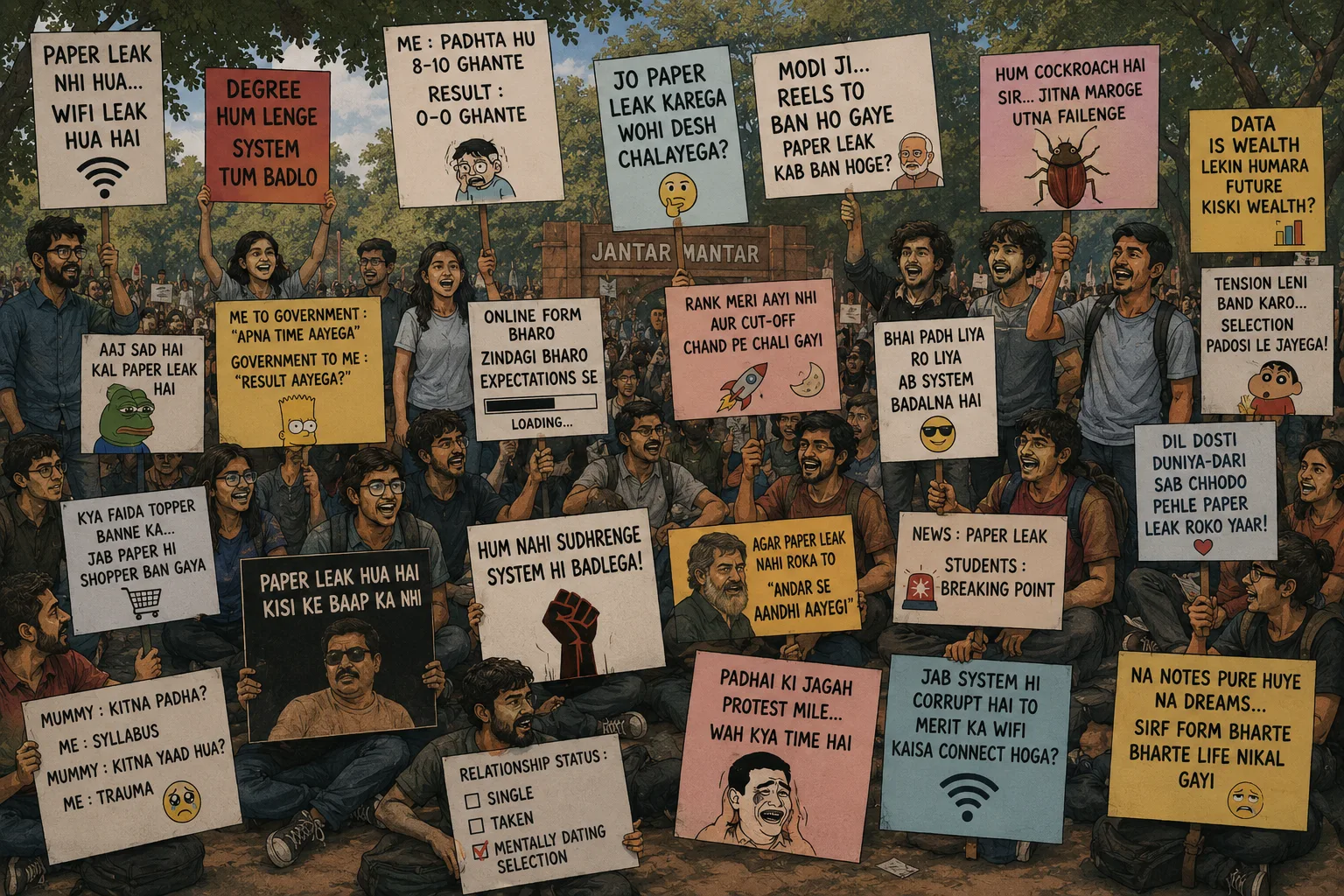
CJP, formed on May 16, 2026,
led the Jantar Mantar movement, barely a month after its formation, with the
core agenda of enforcing government accountability, sweeping examination system
reforms, and youth welfare following major competitive examination paper leaks.
They succeeded in getting resignation of the of the education minister Dharmendra
Pradhan. While CJP was at it, they have been accused of having a secret agenda, is part of Deep State conspiracy. No one takes such speculations seriously, particularly youth, but for those the movement targets.
Many of their leaders, most
prominent being Abhijeet Dipke, Saurav Das have in the past being associated
with Aam Aadmi Party (AAP). AAP entered the political scene by running a movement
against corruption, and seeking greater accountability by strengthening the Right
to Information Act. The movement saw a meteoric rise. They vowed not to enter
the electoral politics, but did, won elections, and ran government in Delhi
under Arvind Kejriwal for ten years, and have a government in place in the
state of Punjab.
So, AAP defied Jäger categorisation,
“surge suddenly forward and, yet, no territory is taken.” Will CJP follow suit,
only time will tell.