

ARUNDHATI ROY IS HER BEST CAUSE
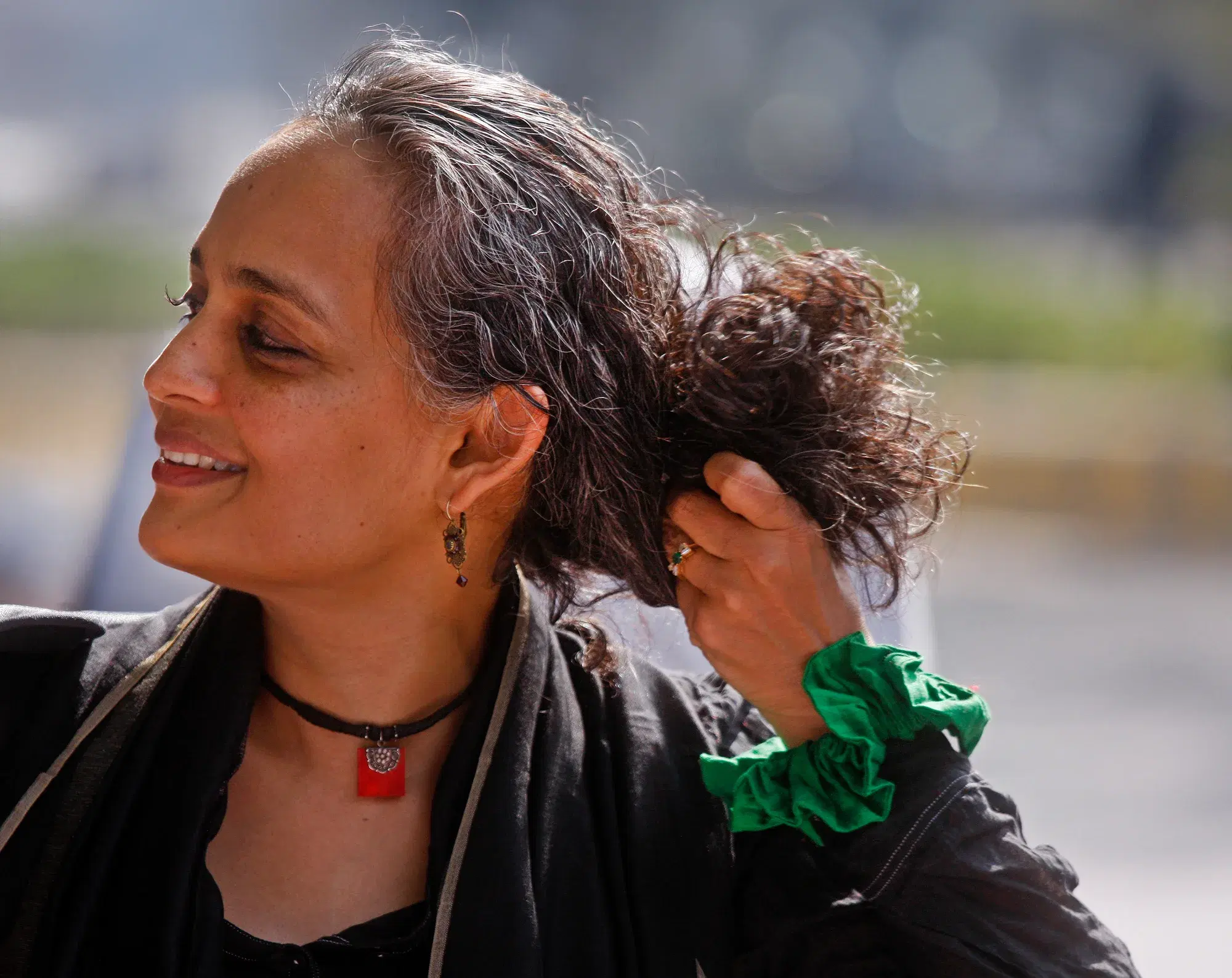
Arundhati Roy may be the best example of what she has spent her career criticising in others.
Pictures by SAGHEER SHAHEEN (AN ARTISTE IN EXILE)
It can be argued that Arundhati Roy is a better actor than most of the politicians she loves to hate (this hate, though, is a genuine feeling, not an act).
To me — who had a brief yet intense friendship with her — she seemed driven by something negative to do seemingly positive things: the need to criticise, labelling people and their intensions, to find fault, to be an alarmist. A doomsayer. Much of what she says is factual, yet selectively so — intelligent posturing.
The
world is complex enough that you can pick and choose facts to weave a narrative
that flatters an egotistical worldview.
Her
worldview has remained unchanged over the past few decades, so she's
predictable. I'm still curious about her writings, though lately it's become
hard to finish her pieces, let alone her books.
What
interests me now is how she'll paraphrase her predictability in light of some
new flare-up — most recently the Cockroach Janata Party (CJP)-led student
protest at Jantar Mantar, which forced the mighty Narendra Modi government to
fire its education minister, who then received a rousing welcome in Parliament
from fellow BJP members, as if he'd made a supreme sacrifice — much to
Arundhati's consternation. There wasn't any guilt, she pointed out. She
expected him to feel guilty.
I
call her a usurper of causes. When something — a movement or a protest — rocks
the country or the establishment, when it becomes potent enough to challenge
power, she seeps in, writes about it, deploys her talent with words, and soon —
before anyone realises — becomes the face of it. But you will never find her
agitating, or fasting, or doing any of the things that actually cost something,
apart from the lip service.
I
have known her since soon after the publication of her book The God of
Small Things, which won the Booker Prize. She got to know me after I did a
cover story for Tehelka on Afzal Guru in 2008, titled "Guilty of
Unsolved Crime." We were also working together privately on an
investigation into the 2001 Parliament attack. I did most of the fieldwork and
shared my findings with her — unprofessional on my part, since my salary was
paid by Tarun Tejpal. She was very receptive, and neither of us had moral
qualms about it. (I described this in detail in my article "Congress
and the Problem with Deluded Liberals": https://openthemagazine.com/features/india/congress-and-the-problem-with-deluded-liberals-2.)
Coming
back to her incredible talent for usurping causes: Arundhati became the face of
the Narmada Bachao Andolan, though Medha Patkar led the struggle for decades.
She became the face of the Parliament attack case, while Nirmalangshu Mukherji,
then a professor at Delhi University, did all the research and attended the
court hearings. In that case, she stole the thunder from crusader-lawyer
Nandita Haksar.
In
the Naxal movement, she was given access and went into the interior to file a
one-sided report — very well written, her version presented as gospel truth,
akin to the "Godi media" she criticises for its inherent bias.
The
access granted to her was a story in itself, one she stayed silent about. Who
organised her trip? The Naxal leadership — to run a story in their favour.
That's what PR companies do routinely, and get pilloried for. Imagine going
there yourself: you'd likely be shot at, or an armoured CRPF vehicle with
soldiers huddled inside would be ambushed. But Arundhati seemed to have had a
comfortable stay while raising uncomfortable questions.
She
caters to a captive audience. She would gleefully explain, in a Muslim ghetto
like Batla House, how difficult it is to be a Muslim in India — never in
Delhi's Ramlila Maidan. In her gathering if someone takes a contrarian view, is
forcefully guided out of the hall. She’s an ardent supporter of tolerance and
freedom of expression.
It's
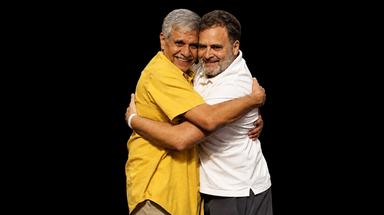
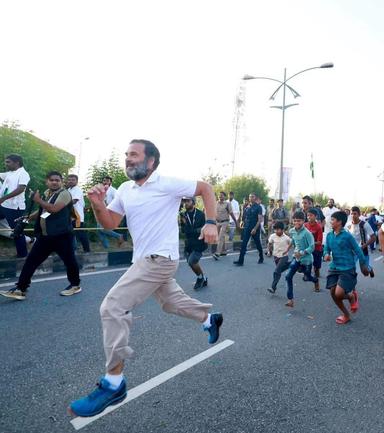
not a good feeling to write this about Arundhati. Yet it needs to be said. No
one came to the CJP's support in the initial days. When the movement gained
traction and thousands of students joined, the political parties and activists
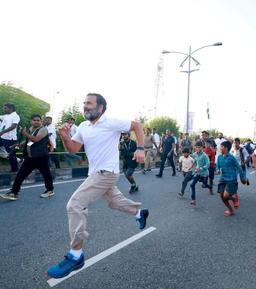
started lining up. So did Arundhati. Photos were clicked, shared on social
media.
Soon
after the protests were over, she went with a reporter from a sympathetic media
house and did a half-hour video, saying some nice things. She's gearing up to
write another of her seminal pieces, it seems — or is video now the preferred
medium?
Political
battles today are fought on social media. She's conspicuous in her absence from
it. Privacy is the fortress she's built for herself.
It's
only logical — she always had to rely on a media house to give wings to her
voice, and the media houses patronised her too, since she's a terrific writer
who creates furore and garners readership. Her longest stint was with Vinod
Mehta's Outlook. Tarun Tejpal at Tehelka tried to
rope her in; she wasn't so forthcoming, though she did an interview with me and
a few isolated pieces. Caravan, for a bit, more recently, and
now Scroll.
She's
done well for herself. What she's been saying — criticising the establishment —
isn't new; she said the same things even before Modi came to power. It keeps
her economy of hate running, and propels her to do more of it. (Here I'm being
a shade unfair — but, following her own example, she gets caustic describing
the people she criticises, so I'll allow myself the same.)
These
days she's promoting the Hindi translation of her book dedicated to her
mother, Mother Mary Comes to Me. She calls her mother
"Mother-Guru" — holding her as magnetic and visionary while also
naming the coercion underneath the devotion. Two sentences stand out: "I
left my mother not because I didn't love her, but in order to be able to continue
to love her." And: "The safest place can be the most dangerous."
The Hindi title sharpens that into something closer to indictment: मेरी माँ मेरी गैंगस्टर (My Mother, My
Gangster).
I
wonder why she published it only after her mother's death, we will never get to
hear and understand Mary Roy’s version of her daughter. This is unfair.
Arundhati didn't spare even her own mother; in that sense, at least, her
negativity is egalitarian.
Arundhati Roy may be the best example of what she has spent her career
criticising in others.