

HORSE TRADING IS AN INSULT TO THE HORSES
Horse trading is a clandestine yet intense round of wheeling and dealing between members of political parties to secure support for a specific bill, split an opposition party, or facilitate cross-voting. To make it possible, amenable members of parliament (MPs)—who are in politics for self-advancement—are lured with promises of money, a berth in the cabinet, or special favours, like the quiet burial of past criminal cases (mostly involving corruption or embezzlement) that would otherwise land them in jail.
These MPs, available to be traded, fight elections on a
certain ideology, take an unequivocal stance on policies and programmes, and
then, once elected, become horses willing to be traded—joining the rival camp
for selfish reasons, doing precisely the opposite of what they promised, and in
the process bluffing the electorate that gave them the mandate. They barter
their convictions for the convenience of power without blinking an eye,
entering into a "scratch my back" political arrangement.
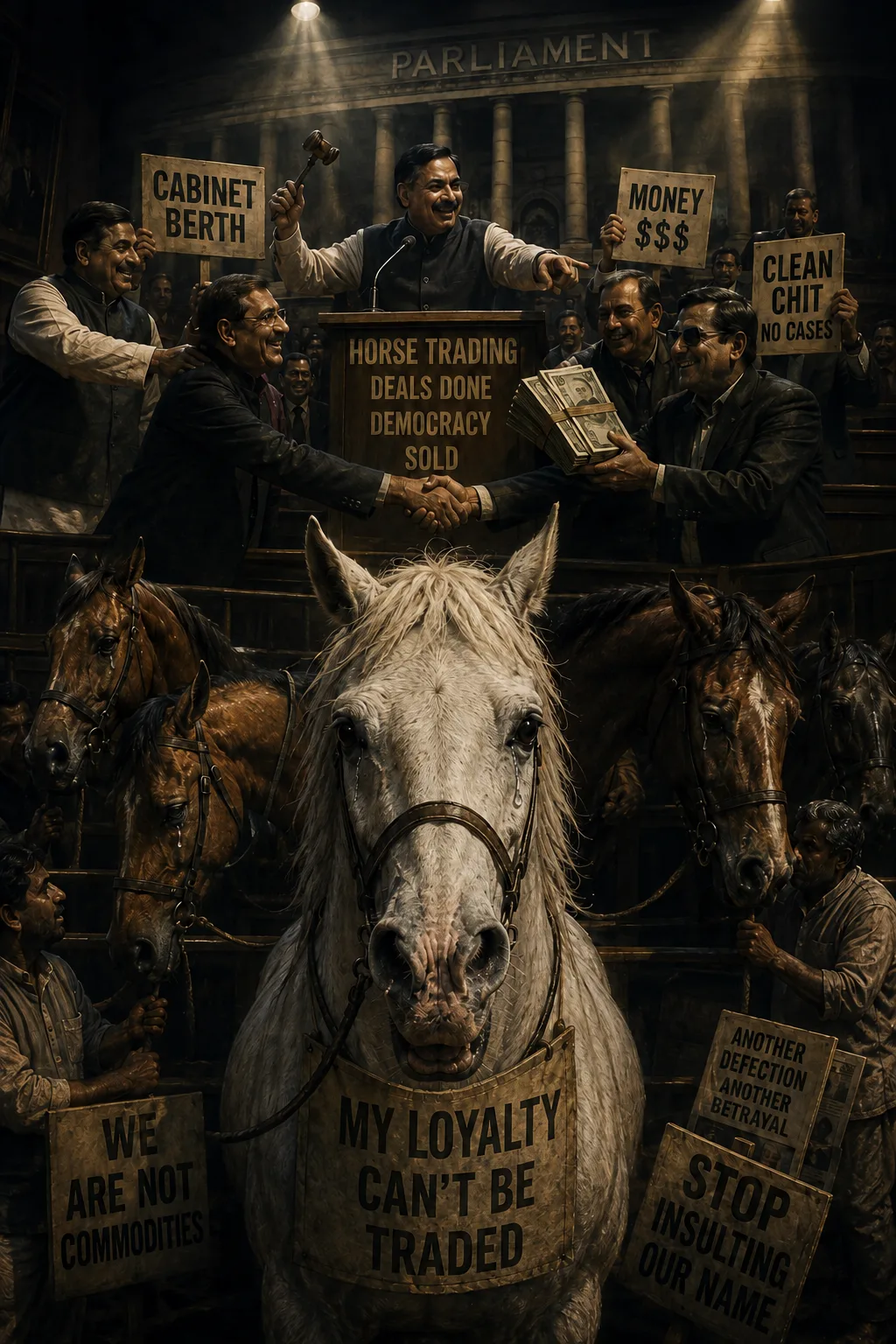
To describe unscrupulous politicians as horses is a grave
insult to one of humanity's oldest friends. And horses have every reason to be
outraged. After all, a horse has nothing to do with "horse trading."
They are traded like commodities, with no say in who ends up buying them, and
stand to gain nothing from the transaction—only more hard labour.
This despite the fact that horses nurture deep, predictable bonds with humans, and have been consistent, trustworthy, devoted companions throughout history.
If they had a voice, they'd shout it from the rooftops,
assemble in large numbers at Jantar Mantar to register vehement protest, even
march on Parliament House—just to make the point, emphatically, that horses are
not politicians and want nothing to do with opportunist politics. To associate
their name with such shady political misconduct is despicable.
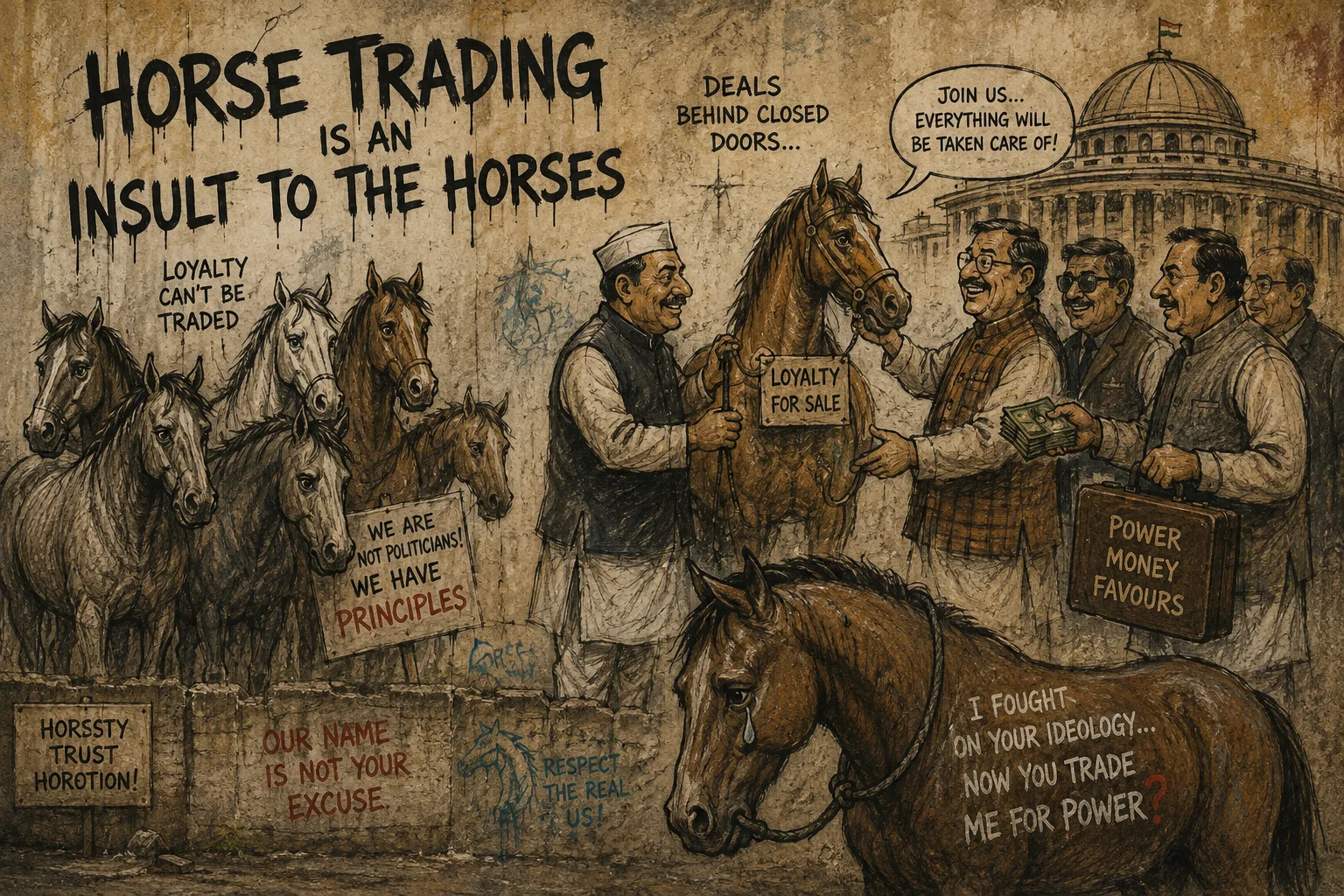
Most recently, Raghav Chadha led seven AAP Rajya Sabha
MPs—including himself—to join the BJP. He announced the move with a palpable
sense of achievement: "As per the Constitution, two-thirds of the total
MPs of a party can merge with another party." He offered no details of
what had happened behind closed doors, but added that the party he'd spent
fifteen years nurturing had deviated from its "core morals and
principles." In splitting AAP, Raghav has apparently exhibited his own core
morals and principles—of the highest order. It's a different matter that the
horses remain horrified. And these horses were not confined to Gen Z.